Replace these every slider sentences with your featured post descriptions.Go to Blogger edit html and find these sentences.Now replace these with your own descriptions.This theme is Bloggerized by Lasantha - Premiumbloggertemplates.com.
This is featured post 2 title
Replace these every slider sentences with your featured post descriptions.Go to Blogger edit html and find these sentences.Now replace these with your own descriptions.This theme is Bloggerized by Lasantha - Premiumbloggertemplates.com.
This is featured post 3 title
Replace these every slider sentences with your featured post descriptions.Go to Blogger edit html and find these sentences.Now replace these with your own descriptions.This theme is Bloggerized by Lasantha - Premiumbloggertemplates.com.
This is featured post 4 title
Replace these every slider sentences with your featured post descriptions.Go to Blogger edit html and find these sentences.Now replace these with your own descriptions.This theme is Bloggerized by Lasantha - Premiumbloggertemplates.com.
This is featured post 5 title
Replace these every slider sentences with your featured post descriptions.Go to Blogger edit html and find these sentences.Now replace these with your own descriptions.This theme is Bloggerized by Lasantha - Premiumbloggertemplates.com.
Joe Danger combines the physics play of Trials with the cartoon presentation and level editor of Excitebike to create the most fun motorcycle game I've ever played. It's great, great fun and a must-download for any Xbox 360 owner that doesn't need to shoot stuff 24 hours a day.
Motorcycle stuntman Joe's time in the spotlight ended long ago after a debilitating injury. He aims to get back into the game but might be a little rusty, so you'll have to help him remember how to pull off all those amazing stunts. They're actually not that difficult to perform, thanks to the simple, responsive controls. You know how some games just feel good to play? That's Joe Danger.
Each stage contains several objectives that will grant you a star when completed, and you spend those stars to unlock additional levels. I really like the amount of freedom Joe Danger provides. A stage may have eight objectives and you can chase after them in any order you like. Maybe you try to collect all of the letters spelling "Danger" or maybe you gun it to cross the finish line under the time limit – it's up to you. If you ever get stuck on a challenge, you can go to another level and try something else for a while.
These are more than just race tracks. Levels branch out like platforming environments with hidden areas and items to find. You explore this game.
I liked Trials HD a lot, but those later levels frustrated me, to say the least. Joe Danger is a much breezier, lighthearted affair. It can provide a challenge for those looking for one (certain objectives are much more difficult to complete than others), but it never discouraged me from getting back on my bike and trying again.
Local splitscreen races pit friends against each other head-to-head, and Joe Danger also includes a "sandbox" where you can make your own levels. The editor is interactive, so you ride through it on your motorcycle and drop objects right in front of Joe at any time. The developers cleverly worked a tutorial for this mode into the regular game, where Joe has to enter the editor to remove obstacles from his path and create ramps to proceed. Building levels proves almost as much fun as playing them. Once you've got a great track you can upload it to share with your friends.
What's so special about the Special Edition?
Joe Danger on Xbox Live Arcade includes Lab Mode, which basically amounts to a new game with its own levels and visual style. In the lab you find even zanier stunts and challenges than in the original Career Mode.
Closing Comments
How fitting that the character Joe Danger is an aging relic being dusted off and put back in the saddle. The game mirrors its hero: classic and old fashioned, but still boasting the skills to amaze us. Joe Danger constantly surprises and delights. The clever level design encourages return visits to look for all the hidden goodies, much like a Mario platformer does. It's a joy ride.
The Legend of Zelda: Skyward Sword (ゼルダの伝説 スカイウォードソード Zeruda no Densetsu: Sukaiwōdo Sōdo?) is an action-adventure game for the Wii console and the sixteenth entry in the Legend of Zelda series. Developed by Nintendo Entertainment Analysis and Development, it was released in Europe on November 18, 2011in North America on November 20, 2011, in Japan on November 23, 2011, and on November 24, 2011 in Australia. The game makes use of the Wii MotionPlus peripheral for sword-fighting, with a revised Wii Remote pointing system used for targeting. A limited edition bundle featuring a golden Wii Remote Plus was sold coinciding with the game's launch, and the first run of both the standard game and the limited edition bundled included a CD containing orchestrated tracks of iconic music from the franchise in celebration of the franchise's 25th anniversary.
The game's storyline is the earliest in Zelda continuity, preceding The Legend of Zelda: Ocarina of Time. Skyward Sword follows an incarnation of the series protagonist Link who was raised in a society above the clouds known as Skyloft. After his closest childhood friend, Zelda, is swept into the land below the clouds by demonic forces, Link does whatever it takes to save her, travelling between Skyloft and the surface below while battling the dark forces of the self proclaimed "Demon Lord", Ghirahim.
Upon release, the game received universal critical acclaim, receiving perfect scores from publications including IGN, Wired, Edge, Famitsu, Game Informer, and Eurogamer. Much of the praise was directed at the game's intuitive motion based swordplay and the changes it brought to the Zelda franchise.
Plot
In the chronology of the series, Skyward Sword is a prequel to Ocarina of Time, and elaborates on the origins of the Master Sword and Ganondorf. According to legend, after the creation of Hyrule, the Triforce was entrusted by the Golden Goddesses Din, Farore and Nayru to the deity known as Hylia. However, the Demon King Demise gathered an army to take the Triforce for his own evil intent. Using her power to create the floating islands called Skyloft to keep the Hylians and the Triforce safe, Hylia and the remaining tribes—the Ancient Robots, the Parella, the Kikwis, the Gorons, and the Mogmas—battled Demise's horde before the demon was defeated.
The plot begins many years after the prologue and follows an incarnation of the protagonist Link, who was born and raised in Skyloft, who begins to have dreams of a strange figure. Woken up by his childhood friend Zelda, Link gets ready for the Wing Ceremony, a tradition to acknowledge one as knight. Link completes the ceremony after overcoming the attempts of a classmate, Groose (バド Bado?), to sabotage him. However, Zelda is then taken in by a storm which sucks her down to the still demon-infested Hyrule. Soon after, Link learns that the figure from his dream is Fi (ファイ Fai?), the spirit of the Goddess Sword which Hylia created in case the evil she defeated was to stir again. With guidance from an elderly woman in the Sealed Shrine, Link pursues Zelda to the Skyview Spring where he encounters the Demon Lord Ghirahim, who is responsible for Zelda's predicament. However, tracking her down to the Earth Spring, Link learns that Zelda is being protected by a mysterious woman named Impa. It is later at the Lanayru Mines that Link receives the Goddess Harp from Zelda, as she and Impa depart into the past through a Gate of Time before it is destroyed during the fight with Ghirahim. Later, when Groose ends up following Link to the surface before fighting the monster known as the "The Imprisoned", the elderly woman advises Link to seek out three sacred flames of the Golden Goddesses in order to increase the power of his sword to activate the second Gate of Time within the temple. Along the way, he also strengthens his spirit through the trials set by the three Goddesses. Once all three flames are infused into it, the Goddess Sword transforms into the Master Sword and he is able to enter the Gate of Time, arriving in the time period where Demise was just recently sealed away by the Goddess.
Zelda reveals she is the reincarnation of Hylia herself; her trip to the Springs meant to restore her past life's memory before traveling back in time to enter a deep sleep in order to keep Demise's seal active so that The Imprisoned, Demise's cursed form, cannot break free. She tasks Link to search for the Triforce hidden in Skyloft to destroy Demise. Once acquiring the complete Triforce in the present, Link uses its power to crush The Imprisoned under the descending Isle of the Goddess. Soon after, Zelda awakens from her slumber and is reunited with Link and Groose. However, the reunion is cut short by Ghirahim as he kidnaps Zelda before entering the Gate of Time, intending to resurrect Demise in the past.
Despite Link's attempt to stop him, Ghirahim succeeds sacrificing Zelda's life force to The Imprisoned. It reverts into Demise, who reveals Ghirahim to be his sword. He challenges Link to battle, impressed with the youth's bravery. Link manages to mortally wound Demise in their epic battle, giving Zelda back her soul in the process. In his final words, Demise swears that his hatred will be reborn (as Ganondorf) and will haunt the descendants of Link and Zelda for all time, before he disperses into a mist which is then absorbed by the Master Sword. With her mission done, Fi asks Link to place the Master Sword into the shrine's pedestal while she enters a deep sleep. Link and Zelda also say their goodbyes to Impa, who is revealed to be of this time and must watch over the Master Sword to ensure Demise's destruction. Link, Zelda, and Groose return to the present, where the elderly woman reveals herself to be Impa before she finally passes on after fulfilling her duty. After saying their goodbyes to Groose, Zelda admits to Link that she wishes to stay in Hyrule, and Link decides to stay as well, while both of their Loftwings fly off in the distance.
Review
Pairing itself with Wii MotionPlus, Skyward Sword's 1:1 combat is a revelation. I never want to play a Zelda game any other way again, and playing through this makes me wonder why we didn't see motion control of this quality before. The responsiveness and intuitiveness of the entire arrangement is superb. The applications of Motion Plus never step into gimmicky territory. Guiding your mechanical flying Beetle, rolling bombs, swimming in water and soaring through the sky by pivoting and flicking the remote not only feels natural, it makes you wonder how you ever played an action game that wasn't on Wii. Zelda: Skyward Sword is the purest, most perfect realization of Nintendo's ambitious goals for motion-controlled gaming. It somehow took five years, but the definitive proof plays out before you on the screen.
The new combat system requires skill and patience. Though impulsive, unpredictable waggling can get some results, most enemies are programmed to react to such behavior, and they'll punish you for it. On occasion my temper would get the best of me against an enemy, but swinging my remote faster didn't help. Some enemies anticipate your moves or use their weapons to block certain attacks, making routine fights far more challenging and complicated than in past Zelda games. None of your enemies are overtly difficult, but the added complexity, combined with more sophisticated puzzles and world designs, make each victory that much sweeter. What Ocarina of Time started with lock-on targeting, Skyward Sword perfects by adding layers of nuanced strategy. You'll rarely die, but you'll find yourself working hard to defeat and out-maneuver your opponents.
Combat isn't the only area of the game that's become more thought-provoking. Nintendo has changed the concept of dungeons and the overworld itself. Previously, a wide open mainland would branch off to smaller areas that would lead to vast dungeons. That concept effectively ends in Skyward Sword. Though the sky realm is a huge area to navigate, it's generally just used as a way to access different regions in the land below. The game wisely implements a quick travel system early on, allowing Link to rapidly access areas he has already explored and removing a potentially tedious element. There is a slight disconnect between the earthly realms, but that does serve to add a sense of wonder about the unknown, particularly when huge areas of your map remain blank.
The changes don't end there. Not only is travel faster, but the surface world packs in an enormous amount of content. Taking a page from Metroid, Skyward Sword requires you to travel repeatedly back to familiar environments, each time altering some key attribute or providing you with new tools to make the experience completely fresh. New areas and paths lead to vast, unexplored territory that is just as deep, important and engrossing as any of the material that preceded it. Combat aside, Nintendo's greatest achievement in Skyward Sword just might be its new approach to designing its worlds. Arriving at dungeons and temples now takes hours, and none of that time is wasted. The sheer brilliance on display here, evident more and more as you journey deeper into the game, will stun even the most jaded gamer.
Dungeons are now smaller, and tired staples like lighting torches and endlessly pushing blocks are largely absent in favor of far more creative concepts that frequently use all of the items at Link's disposal. Some dungeons even relish forcing you to methodically work one item to the next, a reminder that you have many tools at your disposal. Skyward Sword's dungeons not only manage to progressively get better, they're some of the most genius designs ever seen in the Zelda series. The final temple just might be the best Nintendo has ever created.
Despite their polarizing, standard definition nature, Skyward Sword's visuals count amongst its strongest points. Nintendo has finally found a style that perfectly embodies the Zelda series. By capturing the maturity of Twilight Princess and the vibrant, youthful energy of Wind Waker, this franchise now has the perfect outlet to fully express itself without compromise. Full of bizarre, quirky characters as well as creatures from the darkness, Nintendo has found a tone that captures the best of both ideas while still serving the most important element of all - the gameplay.
Great graphics don't always revolve around polygon counts and high-res textures. Where Skyward manages to excel, and completely overcome its hardware limitations, is its creative and inventive art direction. The minimalist approach not only serves the game's tone but allows the designers to come up with outlandish environments and creatures that wouldn't work in a more realistic setting. Animation and character expressions are equally well done, and are largely responsible for why the game's cinematics work so effectively. Nintendo also implemented a clever, distance-based filter that blurs objects and scenery further in the background. Though initially jarring, it actually has a rather painterly quality to it that hides its attempt to help Wii cope with the game's epic scale.
Music has always been an important element of the Zelda series, increasingly so when Ocarina of Time tied gameplay and sound together over a decade ago. Skyward Sword represents a shift in that dynamic, confining the involvement of music and instruments largely to optional tasks or the plot itself. Don't expect acquiring the harp to significantly change how you'll play the game. Songs are generally discovered and played once as Link continues his adventure. Beyond that, expect to only play strings when Link needs a bit of extra health or wants a hint from a Gossip Stone.
The standard for music in the Zelda series is very high. While this legacy makes it difficult to rank this score above other titles, some of the themes in Skyward Sword stand alongside Zelda's best, utilizing orchestral music for the first time in the franchise's history. Nintendo was very selective in its usage of the orchestra, opting only for sequences that were very grand in scope. The music that plays as Link flies through the sky is a great example of this.
No game is perfect, and Skyward Sword suffers from a few small issues. Every now and then the camera isn't quite in the position it ought to be. The Wii Remote will require calibration here and there, and somehow seems to know when doing so will be most inconvenient. The framerate will dip now and then, and of course the game is constrained by Wii's processing power as well. By and large the biggest amount of grief will come from whether or not the game is meeting some fans' expectations. Key ideas or iconic franchise concepts - you won't see the Iron Knuckle or the infamous Cuccoos here - were thrown out entirely in the name of evolution. All of these are fair observations, but ultimately they pale when compared to Skyward Sword's strengths. In many ways this game represents a breath of fresh air, the next major step for a superb franchise. It's hard to even care about small problems when you're watching Nintendo lay out its vision for the future of its grandest saga.
Closing Comments
The Legend of Zelda: Skyward Sword will be remembered for revitalizing a franchise that had, for a time, seemingly settled for being merely great instead of revolutionary. Once again, Nintendo is demonstrating its unparalleled ability to craft some of the greatest gameplay this industry has ever seen. Remarkably, this Zelda game manages to reshape its control scheme, design sensibility and pacing all at once while still telling a brilliantly powerful story featuring some very memorable characters. Increasingly Nintendo refuses to compromise cinematic storytelling for gameplay, finding a balance that seems effortless.
It's fitting that Skyward Sword arrives on Zelda's 25th anniversary, because it truly pulls from the franchise's entire history, even addressing the winding narrative directly within its story. It captures a grandness and scope we haven't seen since the 2D era. It advances combat and control in the most significant way since Ocarina of Time. It finds a tonal and visual harmony between Wind Waker and Twilight Princess. And, most importantly, it leaves a mark on the franchise that future installments will no doubt draw inspiration from for years to come.
This is the Wii game we've been waiting for. Through all of the mini-games and odd sports collections, many wondered if and when Nintendo would ever find a way to deliver a deeper experience that still fulfilled on Wii's limitless potential. Skyward Sword makes good on that promise.
source: wikipedia, ign
Gamers who had the fortune of experiencing the Nintendo 64 era firsthand no doubt harbor fond memories of staying up until ungodly hours shooting their friends in the face in GoldenEye 007. GoldenEye 007: Reloaded for PlayStation 3 and Xbox 360 repackages last year's Wii remake of the classic shooter, but with the addition of upgraded graphics and extra play modes. The results make for a rather addictive experience.
With an almost entirely new story, Reloaded won't exactly get your nostalgia engine running -, but you will find some well-placed nods to the N64 adventure (you can still shoot that one guard while he's on the can, for instance, but you can no longer snipe his hat off first). But while Reloaded greatly deviates from its source material, lovers of the original will appreciate how the game plays with your expectations, making for some interesting takes on classic scenes. The famous dam jump from the first level, for instance, pays due homage to its roots while throwing in a new twist that makes the whole affair feel fresh and unexpected.
For those playing solo, the main story campaign offers plenty of fun, though it ends a little too quickly. The new MI6 mode compiles a collection of objective-based missions with an offensive, defensive or stealth focus. MI6 helps extend the single player experience, but I honestly wasn't too impressed with it. A lot of these missions felt downright tedious due to the dodgy AI - which I found less noticeable during the story campaign, but glaringly obvious during MI6's continuous, single map assaults. If you exit then re-renter a room, you can sometimes see the same set of foes show up from the same place, saying the same thing over and over again until the loop randomly ends (which sometimes takes a while). Needless to say, it kills the illusion a bit once you pick up on it.
While passable and still fun, Reloaded's single player experience failed to impress. Thankfully, the game shines in multiplayer - which is easily the meat and potatoes of any FPS anyway. With the ability to play both locally and online, you'll find a vast array of options for customizing your multiplayer sessions.
You can turn on Golden Gun mode for a good, old fashioned one hit death match, or turn on Paintball mode to add some color to your kills. You can play as a team, play hot potato with a bomb, or try your hand at escalation mode (where players must pull off a kill with each of a pre-set selection of weapons). For me, the best part was the ability to play on classic mode and relive the glory days before regenerating health bars replaced health packs. With all these options to toy with, you'll find Reloaded's multiplayer quite addictive.
A decent variety of maps, from large locales to close quarters, allows for the full range of play styles and strategies. Plenty of character options round out the package, but more choices that people have actually heard of would have been better. Sean Connery or Pierce Brosnan's take on 007 would make for way better inclusions than the multitude of generic foes we got instead.
As for graphics, Reloaded certainly offers an improvement over the Wii version, but still doesn't fully make use of the Xbox 360 or PS3. Character models do a great job of capturing the characters, but some blocky shapes and blurry textures - paired with the occasional appearance of some crazy invisible walls - bring the whole thing down.
Closing Comments
Addictive multiplayer will keep you coming back for more, especially with all the different ways to play. Single player has its moments, but some rough edges (invisible walls and less-than-stellar AI) make the whole package suffer. The new MI6 mode especially failed to capture my interest, though it might be worth toying around with. But considering multiplayer is inarguably the main course, GoldenEye 007: Reloaded won’t disappoint. While it lacks the charm of the original and the polish of other modern shooters, overall you’ll find a great experience that was just a few tweaks away from being amazing.
Sometimes reviewers can't see the forest for the trees. When I finished Batman: Arkham City, I immediately cataloged what I thought it did wrong. It tossed in too many villains and didn't flesh them out, it clearly tried to replicate the Scarecrow stuff from the first game and didn't do it as well, and Batman still moves a bit stiffly when simply walking around. When I formed the list, I found myself disappointed with the game. But the days rolled on and I couldn't stop playing -- in fact, I only wanted to play more. The hundreds of things Batman: Arkham City nails outweighed my nitpicky problems. I realized Batman: Arkham City is a brilliant game.
If you've missed the roughly 1.4 million stories on IGN, Batman: Arkham City picks up months after the events of Asylum. Former Arkham warden Quincy Sharp now reigns as the mayor of Gotham City, and he's moved the bad guys from Blackgate Prison and the inmates from Arkham Asylum to a cordoned off area in the heart of Gotham. This is Arkham City, Dr. Hugo Strange runs it, and Batman's job is to see what the hell is going on inside. It's an interesting story that starts with one of the best openings in modern games. After two years of dreaming about where this sequel would go, Batman: Arkham City delivered and hooked me. That can be said for most of the game.
Fans of the Batman: Arkham Asylum will immediately be at home in Arkham City as developer Rocksteady took the core gameplay, refined it, and polished it. You brawl with one button, counter with another and leap when you feel like it. Batman's got a slew of new counter attacks -- including the ability to take out several attacking enemies at once -- and the ability to use nearly every gadget in battle with a hot key system. Even though the system can seem simple (that's if you ignore the combos and multipliers) the diversity in the attacks and battles keeps it interesting. I wanted to engage bad guys instead of sneaking past them. Maybe it was the promise of more experience points and the upgrades they unlocked, but it probably had more to do with wanting to see Batman dislocate another elbow.
Rocksteady kept me on my toes by peppering in special enemies. Guys with stun rods, armored outfits and broken bottles all have to be dealt with in very specific ways. I needed to assess threats and engage situations like Batman would. I don't know if I can express how awesome that makes a comic nerd like me feel; after years of hypothesizing how Batman would beat Character X, I now have to do it to survive.
Feeling like Batman made Arkham Asylum a must-play, and Arkham City continues that tradition. I felt like I had the upper hand when I walked into a room where the enemies outnumbered me 20 to 1 because I could drop a smoke pellet, use freeze grenades to take enemies out of the game and basically kick ass. Five gunmen with hostages didn't scare me because I knew I could disappear into the shadows to string them up from gargoyles, punch through walls to take them down and glide kick them over railings.
This feeling of empowerment carries over to bosses, which is weird at first but makes sense. No boss in Arkham City really gave me a challenge. In fact, they're all a bit easy. Mr. Freeze had me stumped for a while as once you use an attack on him you can't use it again, but then the Bat-computer just sent me a cheat sheet. (Although, disabling hints would've eliminated this moment.) That specific instance was no fun, but overall, the joy of Batman bosses is the journey to them and not the fight themselves. The Penguin will never challenge the World's Greatest Detective.
Arkham City isn't an open world like Liberty City; it's more like a hub world with a bunch of dungeons like The Legend of Zelda or a bigger version of Batman: Arkham Asylum. You can't go into every building, but as you explore, you're going to find you're kept from discovering some of the 400-some Riddler Challenges until you double back with new gadgets. As you unlock the game's dozen side missions, you have to search nooks and crannies for murder victims and political prisoners in distress.
If being Batman sounds good to you, expect to play this game twice and have the second time feel light years better than the first. New Game Plus unlocks after your first runthrough of Arkham City, and it carries over all your gadgets and shares your Riddler Challenge data. It also doesn't erase your original game's progress – it lives in its own section of your save. Historically, I despise playing games more than once. I know what's around the next corner, so where's the fun in it? Well, I adored Batman: Arkham City's New Game Plus. The difficulty is amped up, the enemies are more diverse from the get go, and the reversal indicators are turned off.
New Game Plus takes the training wheels off and forces you to be Batman. When Batman enters a fight, he knows how to win; he just needs to execute his plan. That's you in this mode. You already know what's coming, you just need to execute your 45-hit combo, dodge explosives and save the day. This left me feeling more like Batman than ever before.
Challenges rooms return and have been given an update since the days of Arkham Asylum. There are a dozen combat challenge maps (take out the four waves of bad guys) and a dozen Invisible Predator challenges (sneak around and silently eliminate all the bad guys) and each comes with three medals to earn. All that is standard, but Arkham City offers up Riddler Campaigns. These link three challenges together and apply gameplay modifiers like low health, time limits and so on. There's even an option to make your own Bat-exams. These challenges mainly serve to point out how slow my version of Batman is, but I'm glad they're here. They help hone my skills and provide leaderboards to chase and keep me playing.
Leading up to Batman: Arkham City, Rocksteady talked a lot about the Catwoman missions in the game -- that 10 percent of Arkham City was all about Selina Kyle. Well, it turns out that content isn't included on the disc. If you buy the game new, it comes with a one-time use code to download the Catwoman content. Used copies will most likely have the code snatched up and you'll need to buy the DLC off Xbox Live or the PlayStation Store.
If I can give you some advice, download and install the Catwoman missions before starting the game. Her four story missions, inserted throughout Batman: Arkham City, are a fun (albeit simple) change of pace, and literally change the opening of the game. I downloaded her stuff after beating the game the first time, and the integrated Catwoman stuff during my New Game Plus playthrough was way more enjoyable than just tackling her missions off the main menu. This is downloadable content that expands the mythos of the game as you're playing it. It explains events that are happening off camera.
Outside of the four missions, the Catwoman DLC gives you challenge maps for the feline and the ability to get the special Catwoman Riddler Trophies in Arkham City.
Closing Comments
Batman: Arkham City isn't perfect, but listing the little things I didn't like gets in the way of all the stuff I adored. The voice acting, the challenges, the amazing opening, the unbelievable ending and the feeling of being the Dark Knight -- these are the things that standout looking back. I've beaten this thing twice and still want to call in sick and chase Riddler Trophies.
Batman: Arkham City isn't just better than Batman: Arkham Asylum, it's better than most games on the market.
Like the special agents the game draws its name from, Ghost Recon: Shadow Wars is deceptive. It's not a shooter, and it's not about any sort of Ghosts that you might have come to know from the other games in the franchise. No, Shadow Wars is an entertaining turn-based strategy title, one that's fun enough to make it worth playing through despite a forgettable story and an ultra-clichéd, G.I. Joe wannabe cast.
Familiarity with the Ghost Recon franchise is totally unnecessary in Shadow Wars. Its visual aesthetic is that of a cartoon, with characters every bit as silly as you'd expect from that description. Sadly, though, they're not well animated or voiced to sell this idea. Instead, the characters are one-note stereotypes, throwing out eye roll-inducing one liners. It's like instead of trying to write interesting characters, they just knew they needed to have "the cool sniper" or "heavy weapons guy," and just cashed the idea in without too much thought after slapping a Ghost Recon name on the box for some brand recognition. Next time, let's just call it G.I. Joe.
Like Final Fantasy Tactics or Advanced Wars, the battlefield in Shadow Wars is a grid. You guide each Ghost through it, positioning them based on the stats that dictate how far they can move and shoot. Tactical positioning matters, too, as you have to think about using terrain to block the enemy's line of sight, putting your ghosts in cover, and getting the higher ground. As if that isn't enough, you also have to consider supporting fire, since most troops can return fire on enemies if they're close to someone who's shot at – regardless of whether it's their turn. This all comes together to create situations reminiscent of chess, where every move is often weighty and challenges you to think a few turns ahead rather than just in the moment. If that isn't your thing then you'll likely be bored with Shadow Wars, but I love a quality turn-based strategy game like this. Additional tactical depth is infused into Shadow Wars with the varying classes at your disposal. Each Ghost, along with having a uniquely annoying and predictable personality, also has special abilities and roles. After a few short tutorial levels you have a sniper, rifleman, heavy machine gunner, medic, engineer, and assassin at your disposal. Multiple stages also force you to pick and choose from your soldiers, makingyou consider tactical choices when figuring out the right squad for the task at hand.
The turn-based combat is done really well in Shadow Wars, but the campaign is a little too long considering how repetitious the levels are. While the occasional stage will task your Ghosts with a unique objective like killing a specific enemy Officer or collecting some Intel, the vast majority of the stages boil down to "show up, kill everyone, repeat." Don't get me wrong, every level is fun to a degree because the core strategy mechanics of the game are well thought out, but it would have been nice to have a greater variety of objectives to keep it from feeling like a grind at times. The grind does have its benefits, though. Shadow Wars allows you to level up your soldiers after each mission, giving you the potential to further tweak your favorite fighting force. The leveling system is pretty barebones -- basically just a single tree that you put points into to unlock new armor, weapons, and increased health – but it provides just enough incentive to make finishing a level a little more exciting.
THE 3D Effect 3D without the glasses is pretty incredible technology, but Ghost Recon: Shadow Wars is made no better with it. The 3D does make things in the foreground stand out from those in the background, but this offers no tactical benefit, nor does it serve to change the way you play. Most of the time I simply turned it off, because with it on the battery life suffered considerably. It's a nifty distraction for a few moments, but at the end of the day Ghost Recon: Shadow Wars is not the game to showcase what the 3D tech can do.
Completing the campaign is only…err...half the battle, though. Finishing campaign stages unlocks a number of challenge levels. The funny thing is that these often have much more engaging objectives and intense tactical situations than the campaign. For instance, in one you're given a squad and forced to hold a town against a hoard of zombies. In another you're given only engineers and forced to try and hold a position with a few turrets to your name. Basically, these are all the tactical fun of the campaign with none of the cheesy characters, and limited amounts of the "kill 'em all" objectives. They're fun, and are a great way to spend even more time with Shadow Wars after you exhaust the lengthy campaign.
Shadow Wars also has multiplayer, but it feels hamstringed since it only allows for two players to share one system. Once you pick a map and decide upon the battle conditions (kill them all, defend a control point, etc.), you take turns issuing commands to your soldiers and passing the 3DS to the next person. The modes are pretty much nothing out of the usual (except, perhaps, the zombies vs. humans level), and passing a 3DS between a friend is a totally lame excuse for multiplayer in 2011. The systems have wireless functionality, so why not at least have local play with players using their own copies of the game?
Closing Comments Despite the disappointing multiplayer options, the clichéd characters, and the sometimes repetitious nature of the campaign, the strategy gameplay of Shadow Wars is fun enough to make it a worthy recommendation for any turn-based enthusiast. Hell, it’s good enough to recommend to anyone looking for a entertaining launch game to pick up with their 3DS. Just don’t let the name fool you.
Back in the day Ape Escape was Sony's way to showcase their new Dualshock technology. The game was a tech demo expanded into a fun and fast-paced game. There would have been some nice symmetry if Sony used the franchise to showcase PlayStation Move. Instead, a year after the device launched, Sony releases PlayStation Move Ape Escape, a short, boring, on-rails shooter that is the opposite of what Ape Escape should be. In PlayStation Move Ape Escape, monkeys crash land on Earth and start attacking. They aren't hiding. They aren't running. They aren't escaping at all.
It's really PlayStation Move Ape Attack. Some girls want your help catching them, because their grandma used to have a monkey that got launched into space – that's the premise. There are some cool anime cutscenes to tell the story, which is decidedly more ambitious than a game about catching monkeys dressed as salarymen requires.
To catch these pernicious primates (see what I did there?) you're armed with a fan, a slingshot, and a butterfly net. Ape Escape is entirely on rails, so you shoot at floating bananas and mischievous monkeys (I did it again!) until the game halts you. From there those abject apes (ok last time) start charging you head on as you swipe them with your net. Did that sound exciting? No, right? Because it isn't. It's really boring. The game feels like a mini-game that drags on for hours. PlayStation Move Ape Escape is missing a lot of shooter fundamentals like additional weapons , co-op, and challenge. The game spreads over 16 levels, with the very occasional change like a boss fight, but it's an extremely repetitive one-trick pony.
Closing Comments There are numerous shooters that use PlayStation Move. Time Crisis: Razing Storm and The Shoot are on rails, and games like SOCOM 4 and Killzone 3 also offer Move support. All of them are better options, and all of them offer multiplayer, either locally or online. PlayStation Move Ape Escape is an embarrassing, shovelware shooter that feels more like a bargain bin Wii title than a first party affair.
Well… here we are again. Another Dynasty Warriors game. Another Gundam version. Another excuse to veg out in front of the TV and slaughter armies with less effort than it takes to write this sentence. Half of you who clicked this review did so because you like this series and you should know that it's the same as it ever was. Take that how you will. The rest of you may feel how I feel: video games should do more than just wear out the X button on your controller.
Dynasty Warriors: Gundam 3 is the latest in the 25 (and counting) Warriors game Tecmo Koei has produced. It's a series that has surpassed the need for explanation, so ubiquitous to gaming that describing it is redundant. It takes 10 seconds of video to grasp the game in its entirety. But allow me to explain anyway.
You are a warrior. This time you're also a robot (as opposed to a feudal lord, a mustachioed man with a gigantic ball and chain, or a pair of incestuous twins), fighting waves of other robots. You go through the work of customizing your Gundam, choosing its special skills, and assigning upgrades to fine tune its fighting style. After your Gundam is perfect you take it into the battlefield and press X press X press X press X press X press X press X press X press X press X press X press X press X press X press X press X press X press X press X press X... There's nothing compelling in Dynasty Warriors: Gundam 3 that makes it noteworthy, even in the context of Warriors games. Every mission is the same. Previous Warriors games have managed to mix it up with missions that require different strategies, but with Dynasty Warriors: Gundam 3 you play the same, very basic mission ad nauseam. Amidst the hundreds of missions is the very occasional boss battle, and even that plays out exactly like a normal mission.
Closing Comments For the longtime fans, this is what you like (though even fans should be disappointed at the lack of variety in Gundam 3). There are online co-op missions and a long single-player campaign with hundreds of characters and mechs to upgrade. New gamers, however, should expect more from a video game these days. Gundam 3 feels and looks dated. It can't stack up against other action games, even ones published by the same company.
Improving upon "perfection" is not exactly an easy job. Yet that's the task that falls before Nintendo and Grezzo, the co-developers of The Legend of Zelda: Ocarina of Time 3D. The original Ocarina of Time, which debuted nearly 13 years ago, was universally hailed by critics, including IGN, as one of the best games of all time. It was a milestone achievement, redefining how we viewed action games and how developers made them. "Revolutionary" is by no means an understatement.
Is it even possible to remake a game as influential and revered as Ocarina of Time? Is it possible to satisfy all audiences, new and old? As it turns out, the answer is yes, for the most part. What the teams at Nintendo and Grezzo manage here is a spectacular yet conservative and respectful upgrade. There are a few minor issues, including some areas where graphics could have received an extra boost, but by and large this tows the line between enhancing a decade-old game and meddling with something that is by most accounts flawless.
Graphics will be the core focus of anyone buying Ocarina 3D, as it's the biggest alteration made and Nintendo's biggest showcase for the young 3DS's abilities thus far. Fundamentally this is the same game it ever was. Locations, structures and characters have all been preserved. However, textures, models and animations are all built from the ground up, and have been significantly revised. You'll still recognize everything and everyone, but you'll see them as they were originally meant to be. Ever look at the behind-the-scenes art for Ocarina of Time and wonder where things went wrong for the Moblin or even Link himself? The in-game graphics never quite lived up to the concepts crafted by Nintendo's artists. Those discrepancies are now gone. What's remarkable about the work done for the 3DS version is that it respects its source. It goes to the line set by the game's original artists and absolutely no further. The result is a game that seems so familiar you'd swear it's always looked like this. (Trust me, it didn't.)
The dedication in preserving what made the original game so iconic is admirable, but in some instances it might have been a bit much. While there's no doubt characters should only be revised so much, environments are another thing entirely. While the enhanced textures and backgrounds in the game are quite impressive, resulting in some truly stunning locales (Castle Town in particular comes to mind), the basic architecture of some of these areas is still a bit archaic. You'll certainly run into some blocky looking hills and cliffs, instantly recalling this game's rather dated origins. It makes me wonder why some of this couldn't have been touched up. More awkward examples of this come in the form of stairs and open fields, where the blocky nature of the ground combined with more detailed textures makes it painfully obvious you're running up a sparse, flat surface. The concept of Ocarina 3D is identical to what it was so many years ago. Link, a young elf in the Kokiri Forest, is tasked with helping Princess Zelda to save the world. Along the way he explores nearly a dozen dungeons, acquires powerful artifacts, faces off against some of the most epic enemies and bosses ever devised, and does it all while navigating the past, present and future to prevent the land of Hyrule from falling into darkness at the hands of the evil Ganon.
Back in 1998, Ocarina revolutionized 3D combat with its remarkably polished and innovative Z-targeting system, which forced a camera to lock-on to an enemy, giving players a perfect view of a battle. Many routine actions, such as jumping or climbing, were also automatic or dedicated to a single "all-action" button, allowing gamers to focus on puzzles, exploration and fighting instead of struggling to leap to a specific ledge or adjust their view to scale a wall. This new version goes a step further, using the touch-capable bottom screen of the 3DS to view maps and assign equipment. The system's gyroscope also allows you to view the world around you by physically moving the system.
In the original game, players were forced to frequently pause to adjust inventory or check Link's location. That is easier and more streamlined now, despite the fact that the 3DS's button layout is different from the Nintendo 64's. This time Link only has two physical buttons (instead of three) that can be assigned, as well as two that are based entirely on the touch pad. This works for the most part, though I'd be remiss if I said I didn't miss that third item. Reaching over to the touch pad isn't quite as intuitive, nor is reaching over to go into a first-person view or activate Navi, your companion fairy and general pain-in-the-ass. (She now not only pesters you about what to do or how to fight enemies, but reminds you to take a break from playing the game every 15-20 minutes.) Being able to assign some functions or items to the d-pad would have also been welcome. Gyroscope aiming is deceptively useful. At first glance, it's a useless mechanic that disrupts the 3D effect. However using this method is so intuitive that you'll adjust over time. Considering I was often playing with the 3D off (outside of cutscenes), I ended up not even noticing most of the time.
So the game's graphics and controls have been upgraded while still preserving the core of the game. That is and should be more than enough for any of you who have not played the game before. Ocarina of Time is a masterpiece, and that certainly had not changed. The developers weren't stupid enough to meddle with a formula that worked phenomenally back then, and realized that brilliant gameplay does not age - only technical concepts do. But what does the game offer those of you who know Ocarina of Time like the back of your hand?
In addition to upgraded graphics, Nintendo has added the Master Quest version of the game, which twists dungeons and enemies around, requiring more skill and less reliance on memory than its counterpart. For the 3DS, the entire world in Master Quest has been flipped, meaning whatever used to be to the left is now to the right. It's a subtle difference, but if you intuitively knew the original, you'll find yourself suitably disoriented. The second change is that all enemies in this version now do double damage. The Zelda series isn't often known for its difficulty, but it's likely you'll find yourself in trouble with enemies dishing out more pain than ever before.
In addition to Master Quest, there are a couple more additions to Ocarina 3D. As you complete the game, bosses are added to a "Boss Gauntlet Mode" that is accessible from Link's house in Kokiri Forest. Completion times are tracked, albeit not online, allowing you to compare your best times defeating each boss against your friends'. Additionally, when you've unlocked and beaten all of the bosses in this mode (which does not include the final boss), you can face all of these foes sequentially, with only a small health boost between them.
The final alteration deals with a tips and tricks system built right into the game. As gamers progress through the adventure, special Sheikah Stones will give them the ability to see hint movies that will clue them into the locations of hidden items or give suggestions on how to beat bosses. It's an entirely optional concept, but it could be a big help to some of the younger or newer Zelda fans out there.
All in all the revamped Master Quest, boss gauntlet and hint movies are great, yet it feels like there could have been a bit more. If you know Zelda exceptionally well, the core graphical enhancements are going to have to suffice. Most of these other things, though certainly nice, are merely a different colored icing on a cake that's largely the same. For some of us, experiencing Ocarina of Time through a shinier, clearer lens will be enough. Others will be left wanting, expecting and demanding that the core concept must change to warrant another purchase. Both perspectives are perfectly reasonable. I fall into the former camp.
Closing Comments This is The Legend of Zelda: Ocarina of Time, just as you remember it, reborn for a new portable system and a new generation of gamers across the globe. If you have never played this classic game, stop reading this review and get out there and buy it. The core essence of Ocarina of Time ages exceptionally well (even in light of sequels that have expanded on it), and it's never looked better. That Nintendo and Grezzo were only willing to adjust and enhance so much (by and large the sound is untouched) is truly admirable and speaks to their respect for the source material and its original developers. There is no doubt in my mind that it was the right choice. Why mess with perfection?
That said, that decision comes with a price, one that will frustrate many of you who have played this game over and over again and are in the market for drastic change. If the graphical boost isn't enough - and let's be honest, we're already seeing some games on the 3DS that look better than this - you're not going to have much else to satisfy your interests. It's clear this game is being released to find a new generation of gamers that are just discovering Nintendo's franchises. The rest of us will have to determine if it's worth re-visiting a Hyrule we've known for nearly 13 years. Rest assured, though, that doing so will not only let you relive a masterpiece, it will let you experience it in the best way possible.
There's something about Child of Eden that makes people shut up and fixate on the screen. It could be because you're entranced by the colors bursting artfully in tandem with upbeat techno music or just the thought of, "Holy crap, am I tripping right now?" Either way, this is a title that people take notice of and for good reason. Child of Eden, a spiritual successor to Tetsuya Mizuguchi's cult sensation Rez, is an incredibly satisfying time, but it's one that can be over shortly after it begins.
Child of Eden truly is an experience unlike any other this generation (save maybe Rez HD of course). The story doesn't really matter or make much sense, but basically you're saving a girl and the Internet, which is now known as Eden. Child of Eden is essentially a first-person, on-rails shooter. You're not actually killing anything; you're purifying databases full of corrupt information. It's just you, the reticle, the music and the visuals -- a simple, yet effective formula. It's difficult to explain why it's so cool, but once you get your hands on Child of Eden, everything will make sense.
Each level (or archive) outlines a specific part of life on Earth. Beauty is comprised of plants and butterflies, Evolution includes a whale transforming into a bird, and Passion is more of an industrial paradise filled with machinery. The neon art style alone is something to gawk at, but the incredible score ties each level together perfectly. This is one of those games where the songs got stuck in my head for days and I wanted to play the game just to hear the soundtrack again. The sights and sounds work together to place you in a sort of happy trance. I felt my troubles melt away and the only thing I had to do was explore Eden. You eliminate impurities plaguing Eden by shooting in two main ways: rapid fire shots or a lock-on gun where you select targets and then release a button (flick your wrist if you're using Kinect) to exterminate them. There are multiple control schemes for both a regular controller and Kinect, so you can find what's most comfortable for you.
I've heard people dismiss Kinect as a viable control option because there's no vibration feedback. After trying both control options for Child of Eden, I found that I preferred Kinect's superior responsiveness. Yes, Kinect makes navigating Eden's databases far easier. In fact, the analog sticks seem clunky compared to swiftly moving your hand around the screen.
As for the lack of vibration, I ended up becoming my own feedback by swaying to the beat. I'm sure I looked ridiculous dancing back and forth and flinging my right arm about, but I was having a damn good time.
Don't get me wrong, you can't just dance around and expect to make it through Eden. Enemies will fire projectiles that can only be eliminated by using the rapid fire gun. The only trouble is with all the colors flying around, sometimes I didn't notice when enemies shot at me. In an effort to help players out, there's a incoming shot warning similar to grenade alerts in other shooters, but there's so much going on that it's not always helpful. If I ever was in trouble, I turned to my Euphoria bombs, which devastate enemies and made me feel like I was on a roller coaster ride. (I had to throw my arms up over my head to unleash it with Kinect.)
The trick to success in Eden is to increase your multiplier by using the lock-on gun. Achieving this seems simple -- you'll need to lock-on to eight targets and fire on them in time with the beat. However, this is easier said than done because while you're trying to achieve perfect combos, enemies will fire upon you and you'll be forced to switch back to rapid fire. It took me a while to get the hang of quickly switching back and forth between the guns, but it's really satisfying when you do manage to get perfect multipliers one after the other.
Rez purists will be happy to know that as you progress in Child of Eden, the archives get increasingly difficult. Once you complete the game on Normal, you'll unlock Hard mode. While the difficulty is there for those who want it, Child of Eden also offers a mode where you can relax and enjoy levels without the fear of dying. It should be noted that this god mode, titled "Feel Eden," can only be used on levels you've already unlocked. So, if you were hoping to ease someone you love into the game this way, you'll need to unlock everything yourself first.
My biggest complaint about the journey is that it's over way before you want it to be; I beat Child of Eden in a few hours. Still, it's clear that the team has made efforts to keep players entranced -- archives only unlock after you earn a specific amount of stars, which you gather by either replaying old levels or completely rocking at nabbing those perfect multipliers.
There are other fun features as well, such as choosing a creature from each level for Lumi's garden (aka the title screen). New art styles, pictures, partial music videos and more all unlock after you play. Leaderboards are another good incentive to return to Eden, and once you complete all five main archives, a sixth opens up that serves as a challenge mode where the objective is to survive as many levels as you can. The music here is a surprising treat -- it starts off as rock and eventually transitions back into Mizuguchi's traditional techno.
Closing Comments It's rare for me to play a game and feel nothing but happiness, but that's what happened when I stepped in to save Eden. In a way, Child of Eden touched my soul. Yes, that sounds cheesy, but it's true. There's one downside -- even though it costs 50 bucks, Child of Eden can be beaten in only a few hours. While this is a fault, there are lots of unlockables and leaderboards to keep people's interest once the campaign is over. This is a game everyone should experience, especially with Kinect.
One of the things I sometimes dislike about reviewing a game is that I'm not given as much time as I'd like with it. Not that I don't get to finish it, just that I'm not allowed to play at my own pace. But with developer Double Fine's Trenched I just couldn't help myself; within two days I had completely blasted through the campaign, grinding levels over and over again to max out my level and collect that oh-so-precious loot. I'm just going to say it: I love this game.
Trenched takes place in a alternate world, where 1940s-esque soldiers pilot giant anthropomorphic machines called Trenches in an effort to fight a madman and his army of constructs. Part third-person shooter, part tower defense, Trenched challenges you to fight wave after wave of enemies in a variety of stages. Sometimes you're defending one position, other times you're defending multiple, but the goal is always the same: deploy turrets and use the guns on your mech to blast the holy hell out of anything you see. Collecting the "scrap" the enemies drop when they die allows you to deploy additional turrets (or emplacements), which look great as they fall from the sky before they drill into the ground.
A big part of the fun in Trenched is figuring out the right mech for the level at hand. Picking a chassis changes the amount of guns and emplacements you can bring, so once you've figure out your play style you have to decide what armaments suit the enemies ahead. If you want to play it like a shooter, pick a chassis that allows you to take a host of guns , supplementing your combat weaknesses with one or two emplacements. If you're more the sit back and watch type, you can take an engineer chassis with hardly any weapon slots and a bunch of emplacements, to create a network of turrets to hit your foes. Sometimes it's fun to bring an assault mech outfitted with six shotguns, while other times I felt like a badass when I'd manage to construct a mech that could fight long range, short range and everything in between. It makes for a lot of replayability, as you can play levels super aggressively one time, or more strategically later. The best part about playing any stage, though, is collecting "loot boxes."There are simply few things better than the thrill of getting randomized loot that allows you to min-max your stats and damage output. I'm a nerd for constant tweaking and customization of my trench. It's downright addictive, and makes me replay stages over and over in hopes to get a shiny new gun or chassis.
Besides a couple of boss battles, all the levels boil down to the simple goal of staying alive and defending a point. The reason it never gets old is due to the sheer entertainment that comes from utilizing your mech against a variety of enemy types. One second I find myself firing an artillery round into a crowd of enemies at long range, the next I'd be swarmed by tiny enemies that forced me to utilize my machineguns while falling back. You can never sit on your laurels while playing Trench, because just when you think you're ready for anything you're forced to adapt to a new combination of enemies. Not only that, but unless you've brought the right emplacements, it's up to you to go out there and collect the scrap they drop. Every stage becomes a dance between shooting and looting, and the few seconds between waves become precious. The gameplay is really well done, but what makes Trenched more than just another tower defense or shooter title is its well-developed atmosphere. The campaign story isn't that important to the levels themselves, but the writing is every bit as witty as I've come to expect from Double Fine. Between levels you return to a hub world on top of an aircraft carrier. Here you can inspect and customize your trench, choose your level, and invite friends to join you in your hub before taking to the field. The setting is just really well done, perfectly capturing the feeling of the alternate mid-20th century.
Inviting some other players to join you in your hub is worth it too, because multiplayer makes replaying levels even better. It's a little too easy to play through stages with four players (despite more enemies or tougher mini-bosses), but with two to three players you can really experiment. One player can take on the role of a tank, leaving the other players to use weaker engineers or exotic combinations of weapons they wouldn't normally take. The best part, though? You get loot every time. Trenched is a pretty short game, but that doesn't really bother me since you can replay levels for more loot and experience. The things that do bother me are minor gameplay choices like the inability to destroy your own turrets. It sucks to take up a prime piece of real estate (turrets have to be placed a few feet apart) with the wrong type of turret cause you weren't paying attention. I could nitpick just about any game, but Trenched is fantastic despite any minor flaws it has.
Closing Comments Trenched is the best downloadable game I’ve played all year. Its skillful blend of witty writing, fun shooting, and tactical tower defense makes for hours of replayable gameplay. Take into account the loot grind that Trenched inspires, and the online coop, and Double Fine’s created a title I hope turns into a franchise.
If you didn't play the PS2-era Prince of Persia games, you missed out on some of the best action platformers of the last generation. But you're in luck if you own a PS3, because the recently released Prince of Persia Trilogy is great. Priced lower than a standard retail game, it contains HD versions of what I consider the Prince's best adventures. Unfamiliar with them? Click on the images below to see the IGN reviews of each of the original games. Maybe you've never played a Prince of Persia game. Well, allow me to bring you up to speed: The Prince of Persia games tell the story of the titular Prince, taking you through his fall in the Sands of Time, his soul-searching in Warrior Within, and concluding with his attempt at redemption in Two Thrones. It's pretty heavy sounding stuff, I know, but it's charmingly written, at times touching, and always light-hearted. Sometimes the story falls a little flat, or comes across a little cheesy (especially in Warrior Within), but overall it's a satisfying yarn worth completing.
After booting up the Prince of Persia Trilogy you're given the option to jump into any of his older adventures. Once you've decided between The Sands of Time, Warrior Within, or The Two Thrones, you're launched into the HD remake of the selected game. Each has all the same menus and music as the originals, but this time around it's been made to look great on wide-screen TVs. Just don't expect to switch rapidly between the games, because it seems that once you make a selection you're stuck in that game until you quit to the main PS3 menu. Along with the widescreen support, all three games are presented at a higher resolution. The resulting HD graphics aren't going to blow your mind (this is the same engine as the original games, after all), but they do hold up surprisingly well. The giant vistas and beautiful scenery of the Prince games still looks great all these years later. And, if you have a 3D TV, you can experience all of the Prince's adventures in the next dimension, as the entire franchise has been reworked to take advantage of the new 3D craze.
The story's worth paying attention to, but the main reason to play the Prince series is its fantastic platforming. The Prince is absurdly agile, capable of running along walls, jumping incredible distances, and doing gymnastic feats that would make an Olympian envious. Using his skills, you navigate a series of perilous environments, dodging traps and reaching spots that would be, for a lesser man, completely unreachable.
The Prince may be capable of amazing feats, but he's still human and will fail. And when the Prince fails he fails hard, often falling absurd distances or impaling himself on a spike. Not to worry, though, because in all three games he has the ability to rewind time. When you inevitably mortally wound the Prince in one of the more difficult platforming parts, you can, assuming you have some Sands of Time, go back a few moments and try again. It was a defining feature of the franchise all those years ago when it returned in 2003, and it still works well today. It makes the inexplicable moments where the Prince seems to ignore my commands and jump in the wrong direction more tolerable.
When the Prince isn't busy pulling off moves that would make Batman jealous, he's slashing apart enemies with a blade. Combat across all the Prince of Persia games is fun, challenging you to manipulate and control skirmishes with several enemies. Of course the Prince has a few advantages to help him, including his cat-like agility and ability to rewind time. The combat in the franchise has never been as good as some of its contemporaries like God of War, but it's still a fun break from the platforming.
Closing Comments The Prince of Persia Trilogy is a great option for fans looking to play through the beloved franchise again, or for newcomers to check it out with a fresh coat of paint. Not all of the Prince of Persia games are created equal, and there will be times when the story will fall flat on its face, but ultimately all of these games are worth playing – especially at this price. Also on: PC
From SimCity through the development of the best-selling The Sims, Maxis has been a hugely influential development studio and has owned the simulation genre. In 2008, the company released Spore, which was the studio's most ambitious simulation to date, and one that I thoroughly enjoyed. Rather than play it safe and continue in the genre it knows best, Maxis has moved in a whole new direction with its latest release, Darkspore.
Though it has "spore" in the title, Darkspore has very little in common with Maxis' last release. Instead, Darkspore is a Diablo-style hack and slash that's a laudable first effort in a new genre for Maxis, but there are areas where you can tell the developer is out of its element.
In Darkspore, you are a Crogenitor, a master of DNA who is able to manipulate the genetic makeup of living beings. Years ago, some extremist Crogenitors got their hands on enhanced DNA (E-DNA) and attempted to make more powerful beings. Unfortunately, those Crogenitors didn't quite know how to stabilize the E-DNA, and the result was the Darkspore. These super-powerful creatures turned on their creators and eventually spread across the galaxy, wiping out all other life forms and all but a few Crogenitors, who were placed in a cryogenic sleep and sent off to remote parts of the galaxy where the Darkspore couldn't find them. The campaign mode starts with you waking up from your long sleep, and with the help of the AI in your ship, you must create powerful creatures to battle the Darkspore. As far as story goes, Darkspore doesn't get much more interesting than that. Most of the time, your AI is telling you the backstory, giving brief snippets about the planets you'll explore and recalling the events that led to the current situation. Since this is all done in exposition, it's not very engaging. You don't interact with the AI or any of your creatures, so the story doesn't feel like much more than window dressing that's used to move you along to the next planet and more Darkspore battles.
Gameplay is thankfully better than the story. Darkspore's major feature is the ability to unlock and customize 25 different genetic heroes, each of which have four variations. This is where the "spore" element comes in. Darkspore uses a version of the Spore Creature Creator for the customization. While you can't create beings from scratch, you can change how they look by adding or removing different items or changing their color and markings. Like in Spore, different body parts change your hero's stats. In addition there are weapons and armor to equip as well. The use of the existing tech for the Creature Creator makes the customization of heroes simple and intuitive.
You only control one hero at a time, though you can take three of them into and switch between them at any time. Each of your heroes has one of five genesis types, and one of three classes. Darkspore of the same genesis type as your hero will do twice the damage, so you have to strategize the type of heroes you take into each level. In addition to the type and class, each hero also has four unique abilities it can use in a fight. This is a fairly simple system compared to other games in the genre, making it easy for players of any level to understand.
he large variety of heroes and the customization element really are Darkspore's strongest points. There are both melee and ranged heroes in each of the types and classes, meaning you can easily put together a squad that matches your play style. It takes some trial and error to find out how you like each hero's unique abilities, but the sheer variety of options keeps the gameplay interesting for a long time. Behind the Scenes
How did we review Darkspore? Head over to Nicole Tanner's blog for a breakdown of how much we played, which level we reached and more. Other aspects about Darkspore I enjoyed were the inclusion of optional objectives and the ability to chain levels in order to up your chances at rare items. After completing each level, you're given the option to get your item and return to your ship to further modify heroes, or move directly into the next level in order to gain more medals. This encourages you to challenge yourself with the reward being a greater probability for a powerful item.
Doing well at Darkspore is all about the items, which are dropped in generous amounts throughout the campaign. Your heroes don't level up themselves. Instead the various items you get throughout the game have levels, and your hero's level is determined by the items you have equipped. As a Crogenitor, you level up, and gradually unlock more heroes and purchase overall upgrades for your heroes. While this system works fine, I would have liked to see some level progression on the individual heroes in order to have something to show for a hero you've used multiple times.
Even though Darkspore's tone is a fairly serious, there are elements of Maxis' trademark sense of humor. Your heroes make noises as they battle. While most of these are grunts or computer sounds, some of the heroes actually say things like "Sue Me" and "Crybaby." This was a nice touch that added an appropriate amount of flair, and any more would have altered the tone too much.
But even with all of these features, Darkspore could use some improvement. While some areas of the game look really pretty in an Avatar-like way, others are just bland and boring. Additionally, your heroes look a bit out of place in some of the environments that enhance a black outline around them. This makes them look more like stickers placed on a background rather than characters in a cohesive world.
Maxis has said the game was designed to be played cooperatively, and they weren't kidding. The campaign gets very difficult very quickly if you're going it alone. I found myself forced to go back and replay previous levels multiple times, chaining them as much as possible in order to get more items and experience so I could get through the later levels. I fully expected to need to do this a little bit, but the amount of level-grinding is excessive.
Another area Darkspore falls short in is the competitive multiplayer. Darkspore does not include ranked multiplayer. Without ranking the competitive multiplayer is a catastrophe. I found myself either against an opponent who was way too easy to beat, or one that was a significantly higher level who wiped me out in a matter of seconds. That's just not fun, and it seems like a pretty obvious thing to overlook. I was told there is some "balancing" in terms of the level of damage done, but it wasn't apparent from my experience playing it. This is something Maxis needs to rectify or there's no real point in playing the competitive multiplayer at all.
Closing Comments There are some really great things about Darkspore. The vast amount of customization options and the simple but fun battle system kept me interested enough to overlook the poor execution of story. However, a broken competitive multiplayer system and a single-player experience that forces you to excessively replay level after level in order to get powerful enough to continue make it obvious Maxis needs a little more practice developing games that aren’t simulations.
Mega Man was in no rush to get to the 16-bit era. While many popular franchises from the original NES tried to re-establish themselves with sequels as soon as the Super Nintendo came around, Mega Man hung back. He did more NES follow-ups instead, with Mega Man 4 and Mega Man 5. By the time Mega Man 6 went into development using the old 8-bit hardware, many fans of the series started wondering if Capcom's designers ever intended to upgrade the Blue Bomber for the next generation.
They did. They were just taking their time.
Mega Man X finally launched for the SNES around two and a half years after the system's debut, and the reason for the extended wait became clear. This wasn't just another Mega Man game with better graphics, it was a complete reinvention of the franchise.
"X" was an all-new Mega Man character. Sleeker, faster and edgier than the original blue bot, he introduced long-time Mega Man fans to a grittier, more futuristic version of the cartoony world they'd come to know on the NES. And the gameplay got some significant changes too. The core of the design was still focused on running, jumping and blasting enemies through a set of eight stages you could play through in any order you wished, but X also introduced more advanced maneuvers like dashing, wall-jumping and on-the-fly weapon-swapping. Mega Man X also remixed the roster of expected robot foes, turning the stage-end bosses into animal cyborgs instead of just themed "men." Old Mega Man fought against Flame Man, for example, but Mega Man X got the elephantine Flame Mammoth.
It further distanced itself from the franchise's past with an all-new arch-nemesis named Sigma and a fresh, sword-wielding supporting hero named Zero. Furthermore, Mega Man could now increase the length of his health meter -- and he could upgrade his suit piece by piece to complete a set of all-new armor.
The whole experience was all wrapped up in a package that included slick visuals, beautifully tight controls and a killer soundtrack. Capcom made Mega Man fans wait a long time for the arrival of X. But when it arrived, its excellence made everyone forget how long the wait had been.
Now it's happening again. The Wii's Virtual Console service has been active since 2006, and as one of the top-tier titles from the SNES library you'd think Mega Man X would have debuted for download much earlier than 2011. But, again, Capcom made the fans wait.
And, again, it's hard to be too angry now that we're once again able to enter the world of X. This game holds up beautifully on Wii. The Classic Controller is a perfect substitute for playing it with an old SNES pad, the Save State feature now records your progress so you don't have to worry about writing down the old grid-based passwords and you can't beat the asking price of just eight bucks. Well, you sort of can. Mega Man X's last re-release is still a viable alternative option to this VC re-issue, as Mega Man X Collection came out on the GameCube five years ago and can be played on Wii as well -- owners of that disc probably don't need to splurge on this new digital version. The PSP also got a great remake of this same adventure in Mega Man: Maverick Hunter X, also released back in 2006. If you've got that one still on your shelf, you could also safely ignore this latest edition.
Closing Comments But if you've never played it before, you really should play Mega Man X in at least one of its forms. It's a spectacular action experience, a great transition of the 8-bit Mega Man series into a separate and satisfying 16-bit saga and just a total blast all around. And hey, who knows? Maybe if the original Mega Man X pulls in good sales numbers here on Wii, Capcom might consider reviving this series the same way it brought back old-school NES-era Mega Man for Mega Man 9 and Mega Man 10. Mega Man X9? It could happen.
Though Capcom's designers would probably take a long time to make it.
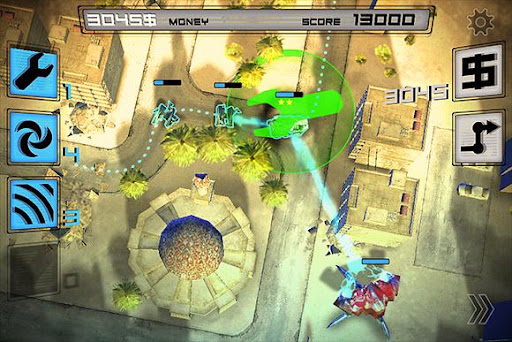
An otherworldly dome eclipses the minarets that once made up the skyline of Baghdad. Beneath that strange energy field, dubbed the Anomaly, something stirs in the wake of an alien ship crash. Unverified reports say the invaders have set up defenses surrounding the wreckage, but unconfirmed theories don't cut it anymore. A team must be sent into the dome to investigate and see just who has taken up residence on the former site of Babylon. You are going to lead that team.
However, Anomaly is not an ass-kicking, kill-'em-all alien shooter. Instead, it's a smart riff on the tower defense formula. Instead of setting up lines of defenses for incoming crawlers, you are the forces that must survive the gauntlet. The aliens have many different weapons with myriad strengths and weakness, so survival depends on your ability to outflank (and out-think) these extra-terrestrial cutthroats.
You control a small on-foot commander that scouts out positions, picks up essential power-ups, and deploys resources as needed. You must make sure your column of vehicles (which you do not directly control) makes it through the defenses. You choose the make-up of your convoy – APCs, launchers, shielding vehicles, etc. – as well as the order of the vehicles within the column. Leading with a well-armored APC, for example, will take some heat off the devastating but poorly armored launchers. Though you can create and upgrade a beefy convoy, success typically boils down to two things: your power-up deployment and your route planning. While you do not drive or aim vehicle weapons, you can zoom out to a high-level map view and click on intersections to designate the column's route through the battlezone. Strangely, I had a lot of fun just trying to make the most efficient routes that could cause the greatest amount of devastation while minimizing both exposure and travel time.
Supporting your column with power-ups is where Anomaly gets frenzied. If you think tower defense games are too chill, Anomaly's script-flip will have you rethinking that position. You have vehicle repair stations, smoke screens, decoys, and more at your disposal – all with timers and different areas of effect. The wide smoke screen will obscure your column for multiple enemy towers, but it doesn't last very long. Dropping a decoy in the middle of a firefight is great for drawing fire away from your vehicles, either giving them breathing room for fighting back or a break in the action for rumbling through a repair power-up.
I became downright excitable during some intense firefights, especially when I realized too late that my route was decidedly less than optimal. I rushed around the streets, trying to replenish spent power-ups by picking up air drops while remaining close enough to my column to give it the support it needed. The commander can be temporarily incapacitated from alien blasts, too, which can prove disastrous if it happens at the same moment the column is most vulnerable. The balance of strategy and action is really impressive. While there are down times as you roll through a cleared area, when the lasers start raining down from the towers and I realized my column was in trouble, I was as wide-eyed hunched over Anomaly as I've been in some games of Team Fortress 2.
Anomaly benefits from great settings, especially the Baghdad location, which tells a narrative without ever speaking a line of dialog. That's good because the actual dialog in Anomaly is rather cut-and-paste tough guy soldier tropes. However, regardless of the script, Anomaly does tell a solid story with a good mid-game wrinkle that sends this alien invasion story spinning into another direction. Developer 11 bit's art direction in Anomaly is striking, too. The war zones are appropriately battered, but the use of bright colors (reds, blues, and greens really pop off the screen) make sure Anomaly doesn't settle into a monotonous sea of desert browns or cityscape grays. The alien designs are playful, although when I was being slammed by an 80-foot-tall behemoth, I found the invaders to be anything but.
Anomaly: Warzone Earth is a clever twist on tower defense that will rope back in gamers that think they’ve had enough of the well-worn formula. The balancing act between action and strategy is nicely tuned. Even when the firefights are ferocious, you’re still thinking about adjusting routes and how to smartly deploy precious power-ups so you don’t run dry later in the mission. And to top it all off, Anomaly’s good story and great locations give you constant reasons to fight. You always want to see what happens next. Thankfully, the gameplay itself is strong enough to bring you back even after the final act.
One sign of a great game is when you never notice it's repetitive. Anyone can be reductive and distill a game down to a few key mechanics that are repeated, but it's up to the level design, enemy A.I., and a host of other factors to keep it interesting from start to finish. Red Faction: Armageddon has successes and failures at this, with pacing issues and levels that swing from super exciting to downright boring. Still, it's worth playing, not only for the better parts of its campaign, but for its great take on cooperative multiplayer.
Armageddon is the fourth game in the Red Faction franchise. You play as Darius Mason, grandson of the protagonist Alec Mason from Red Faction: Guerilla. Darius isn't living up to his grandpa's great name, failing to stop Mars' terraformer from being destroyed by terrorists, and forcing humans underground after the surface becomes nearly inhospitable. As if that weren't enough, Mason gets manipulated and used several years later, being forced to fight an alien menacethat's unleashed onto Mars in a struggle to save the few surviving Martians. Along the way there's romance, betrayal, and several other dramatic tropes.
Or, at least, they would be dramatic if the story wasn't so forced. The story is told almost exclusively through cut-scenes that break up the missions, with characters that we're told to care about rather than those who are developed so that it occurs naturally. Games like Uncharted prove there are good ways to create believable characters with a mix of cut-scenes and intermittent dialogue during gameplay, but Red Faction doesn't accomplish this at all. The dialogue is cheesy and the fates of the characters never seem important when the only time I get to see what they're like is a few seconds in between long sequences spent blowing the crap out of everything. What Red Faction: Armageddon gets right is its use of environmental destruction. Lots of games let you blow things up, but in Armageddon the environment is a weapon, a playground for you to manipulate, contort, and kill your enemies. The best example of this is the Magnet Gun, which allows you to attach a magnet to one object, shoot another magnet at something else, and then watch as object A flies to object B. You can sling enemies into walls (or sling walls into enemies) and watch as they go crashing through the environment, causing secondary explosions. Moments like this are pure, unadulterated fun, and where Armageddon shines. Even when I'm just blasting holes for enemies to fall into, or blowing the crap out of the world, I feel powerful. The guns have the oomph that makes me feel like a badass.
The parts where Armageddon gets noticeably repetitive are where destruction isn't emphasized enough. Levels drag on where there's hardly any part of the environment to use as a weapon. As a third-person shooter Red Faction works, but it's not strong enough to just be that. Fighting a bunch of swarming aliens as they cover the walls is interesting for a level or two, but you really need the destruction hook in a big way to carry it for several levels.
The shooting levels where there's scarcely anything to destroy or use as a weapon also emphasize how uninspired the objectives are in the campaign. You have the ability to both destroy and repair items, but most objectives boil down to running to an area and pressing a button to open a door, extend a bridge, or give you access to another hallway of enemies to smash on. That's fine here and there, but the campaign needed more creative ways to use Darius' repair and destroy abilities.. It's a bit of a rollercoaster in the campaign, where there are boring chunks of levels followed by parts that are awesome. Along with the more exciting levels where Darius has a ton of crap to destroy, vehicle missions help alleviate the sometimes boring pacing. At several points Darius gets to pilot mechs, some of them as small as an exoskeleton, others hulking giants that tear through multi-story buildings at will. It's empowering, and a great way to showcase the sheer beauty developer Guerilla's given to destruction with its GeoMod2 engine. Which is good, because while it looks great while things are blowing up, Armageddon isn't exactly a graphical powerhouse overall. It's not bad looking, it just has some very bland levels.
The campaign may be a little all over the place in terms of pacing and level design, but the other modes are pure, mindless fun. Ruin Mode takes all the enemies out of the world and puts you in a timed arena, challenging you to wreak as much havoc as you can in a short time. It's simple, easy to understand, and really shows off the destruction mechanic. Infestation mode is Red Faction's take on survival, where a team of up to four players holds out as long as they can against waves of enemies, killing them all or trying to protect a structure from falling. Both modes are where Red Faction shines; there's no weak story to ponder, no drawn-out levels – just you, explosives, and an abundance of stuff just begging to be torn asunder. It requires a lot of team work, too, with players purchasing upgrades and carefully choosing weaponry that they know will complement one another. Yes, there's a competitive element to it in the sense that everyone is competing for kills, but the later waves require intense communication. You still get all the spectacle of blowing stuff up, but now you get to experience it with your buddies. Also on: X360: PS3:
Closing Comments Despite its forgettable story and pacing issues with the campaign, Red Faction: Armageddon is good fun for letting out your inner destructive child. They ability to tear apart and repair the environments at will is a hook that keeps working, and when the campaign gives you plenty of stuff to tear apart it’s easy to lose yourself to a primal need to destroy. Combine this with the other modes, including the especially fun take on cooperative survival, and you have a flawed game that definitely deserves a try.


 05.40
05.40
 style
style


 Posted in: Action


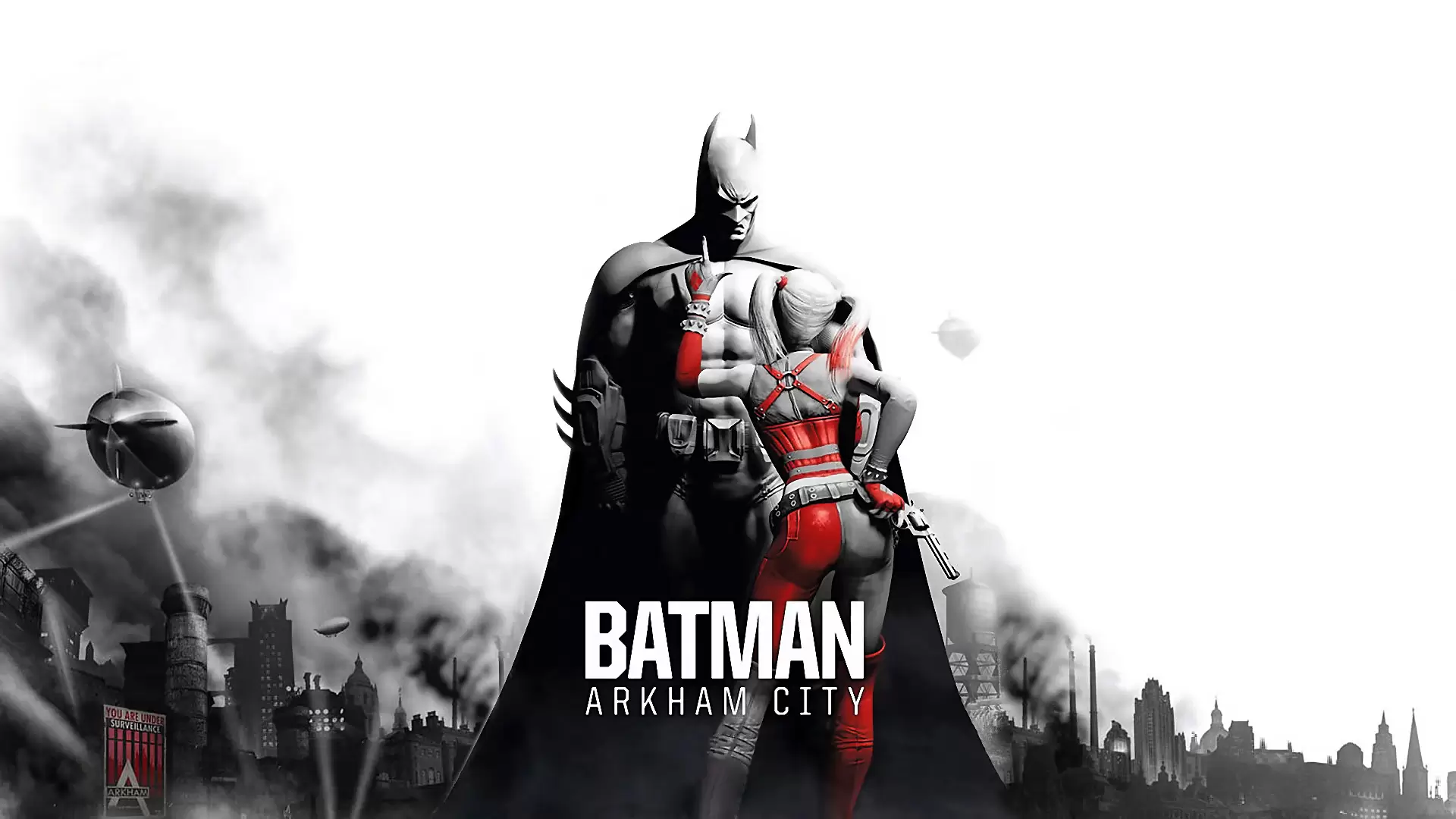


 Like the special agents the game draws its name from, Ghost Recon: Shadow Wars is deceptive. It's not a shooter, and it's not about any sort of Ghosts that you might have come to know from the other games in the franchise. No, Shadow Wars is an entertaining turn-based strategy title, one that's fun enough to make it worth playing through despite a forgettable story and an ultra-clichéd, G.I. Joe wannabe cast.

 Back in the day Ape Escape was Sony's way to showcase their new Dualshock technology. The game was a tech demo expanded into a fun and fast-paced game. There would have been some nice symmetry if Sony used the franchise to showcase PlayStation Move. Instead, a year after the device launched, Sony releases PlayStation Move Ape Escape, a short, boring, on-rails shooter that is the opposite of what Ape Escape should be.
 Well… here we are again. Another Dynasty Warriors game. Another Gundam version. Another excuse to veg out in front of the TV and slaughter armies with less effort than it takes to write this sentence. Half of you who clicked this review did so because you like this series and you should know that it's the same as it ever was. Take that how you will. The rest of you may feel how I feel: video games should do more than just wear out the X button on your controller.
 Improving upon "perfection" is not exactly an easy job. Yet that's the task that falls before Nintendo and Grezzo, the co-developers of The Legend of Zelda: Ocarina of Time 3D. The original Ocarina of Time, which debuted nearly 13 years ago, was universally hailed by critics, including IGN, as one of the best games of all time. It was a milestone achievement, redefining how we viewed action games and how developers made them. "Revolutionary" is by no means an understatement.


 There's something about Child of Eden that makes people shut up and fixate on the screen. It could be because you're entranced by the colors bursting artfully in tandem with upbeat techno music or just the thought of, "Holy crap, am I tripping right now?" Either way, this is a title that people take notice of and for good reason. Child of Eden, a spiritual successor to Tetsuya Mizuguchi's cult sensation Rez, is an incredibly satisfying time, but it's one that can be over shortly after it begins.
 One of the things I sometimes dislike about reviewing a game is that I'm not given as much time as I'd like with it. Not that I don't get to finish it, just that I'm not allowed to play at my own pace. But with developer Double Fine's Trenched I just couldn't help myself; within two days I had completely blasted through the campaign, grinding levels over and over again to max out my level and collect that oh-so-precious loot. I'm just going to say it: I love this game.


 If you didn't play the PS2-era Prince of Persia games, you missed out on some of the best action platformers of the last generation. But you're in luck if you own a PS3, because the recently released Prince of Persia Trilogy is great. Priced lower than a standard retail game, it contains HD versions of what I consider the Prince's best adventures. Unfamiliar with them? Click on the images below to see the IGN reviews of each of the original games.

 From SimCity through the development of the best-selling The Sims, Maxis has been a hugely influential development studio and has owned the simulation genre. In 2008, the company released Spore, which was the studio's most ambitious simulation to date, and one that I thoroughly enjoyed. Rather than play it safe and continue in the genre it knows best, Maxis has moved in a whole new direction with its latest release, Darkspore.


 Mega Man was in no rush to get to the 16-bit era. While many popular franchises from the original NES tried to re-establish themselves with sequels as soon as the Super Nintendo came around, Mega Man hung back. He did more NES follow-ups instead, with Mega Man 4 and Mega Man 5. By the time Mega Man 6 went into development using the old 8-bit hardware, many fans of the series started wondering if Capcom's designers ever intended to upgrade the Blue Bomber for the next generation.


 An otherworldly dome eclipses the minarets that once made up the skyline of Baghdad. Beneath that strange energy field, dubbed the Anomaly, something stirs in the wake of an alien ship crash. Unverified reports say the invaders have set up defenses surrounding the wreckage, but unconfirmed theories don't cut it anymore. A team must be sent into the dome to investigate and see just who has taken up residence on the former site of Babylon. You are going to lead that team.