Tampilkan postingan dengan label Sports. Tampilkan semua postingan

Rabu, 25 Januari 2012

NFL Blitz: PS3

NFL Blitz: PS3
Boil football down to basic plays, long throws, field goals, and tackles, and all that's left is a simplified version of a complex game. But up the ante on those basics, extend the length of a first down from ten to thirty yards, stop calling penalties, set the players on fire, and it becomes a fun, football-caricature called NFL Blitz.

NFL Blitz first exploded in late-90s arcades as a badass take on one of America's biggest sports. Through a series of iterations, it grew and expanded to multiple platforms before losing its official NFL branding and taking a stroll down a fictional, and less appealing, road. But none of that matters now, because NFL Blitz returns with real branding, the original arcade plays, fun new modes featuring zombies, hot dog mascots, and a trading card game online game similar to Madden's Ultimate Team. And NFL Blitz fits in a nice, downloadable package.

From tossing a long bomb 50 yards down the field, to strong-arming a would-be tackler, the arcade-style gameplay returns in full force. Time a series of diving tackles right and the runner will get juggled through the air like a fighting-game victim. The simplicity of available plays, and running a seven-on-seven match makes NFL Blitz the perfect sports experience for those unfamiliar with the intricacies of football or a nice, light snack for hardcore fans. The comedic announcers make the package even more entertaining, whether they're actually talking about football or a Reuben sandwich.

While on-the-clock gameplay remains frantically fun, purists may frown upon the removal of after-the-whistle tackles and post-play elbow drops. This means scoring opponents get to revel in their full celebrations as opposed to wincing when the defending team flattens them mid-revelry. But this omission doesn't ruin the experience; gameplay stays solid and memories of egregious violence remain icing on a nostalgic cake.

Blitz Gauntlet adds a lot to an otherwise simplistic experience. The Gauntlet operates like an old Mortal Kombat ladder, presenting three normal fights followed by a zany boss fight, repeated several times to the top. For each silly boss beaten, like a team of lion mascots or robots, players earn codes to use in everyday play. Before every match there's an opportunity to input a code that can change the ball to Chrome, turn on Big Head Mode, change the camera to widescreen, and more old-school goodness.

Taking the high-yardage battle online yields a good level of longevity. Not only do leaderboards inform players of their score in their region and allow them to rank up amongst locals, every win and stat adds Blitz Bucks to spend on Elite League player card packs, online cheats (cosmetic, anyway), new stadiums, and more. There's a ton to unlock, and getting to use tiny-headed teams against online strangers elicits a smile.

NFL Blitz fumbles on one key option: the ability to change quarter length. While two-minute quarters sound like a bite-sized arcade experience, a full game can actually stretch up to thirty minutes to complete. And what if someone wants to battle a friend for a super-high-scoring-mega-battle with full-length quarters? They can't. Outside of changing the AI's difficulty, NFL Blitz has almost zero customization. An over-the-top experience screams out for over-the-top customization in the type of game being played.

Closing Comments

The lack of late hits and the inability to change the length of games don’t take away from the fact NFL Blitz is a whole lot of fun. Compounded by the fantastic announcers and ongoing unlocks, NFL Blitz is a great sports experience folded into a downloadable package.

by Peter Eykemans

Minggu, 11 Desember 2011

NBA 2K12: Legends Showcase

NBA 2K12: Legends Showcase
What is it?
Legends Showcase is an all new DLC mode for NBA 2K12 that focuses on some of NBA's best players from the last 40+ years. It features multiple new game modes like teammate challenges, which lets you pick a famous pair of players (Jordan and Pippen, Malone and Stockton, etc) and compete against other famous buddy duos. There's also the 3-on-3 era challenges, where three man teams from each decade compete to figure out which era is the greatest. Playground style games like H-O-R-S-E, and 21 round out the batch. The entire mode takes place in NYC's Times Square in front of a roaring crowd, with a new cel-shaded style.

Did we like it?
So the Legends Showcase plays very different from most of NBA 2K12, which can be a good or bad thing, but I had fun with it. H-O-R-S-E is a fun timing challenge, and the half-court games are more aggressive and fast paced than a full NBA game. There are a ton of awesome players in here, from Dr J, to Alonzo Mourning, to Bill Russell, to early 2000s Kobe.

I personally hate the art style. I get that it's supposed to be all fun and cool with the cel-shading, but it looks cheap and blurry, like a bad Photoshop filter. However, the addition of stylish new animations and the energetic commentary gives Legendary Showcase a cool vibe more reminiscent of streetball games.

Should you buy it?
That really depends on how much you want to play H-O-R-S-E. Legendary Showcase is a cool, lighthearted addition that puts the spotlight on players of the past, which is awesome for those of us who are into that (whether you're old, or a basketball geek, s'all good). As fun as these modes are, however, they're all superfluous and don't quite measure up to the level of the game's original modes. The biggest selling point is probably the ability to play a new online mode using Legendary teams, but that's only useful for fans of the online mode. You definitely need some friends to fully appreciate this mode, so unless you have a couple basketball loving buddies at hand, you won't get the full experience.


CLOSING COMMENTS
NBA 2K12's Legends Showcase is a fun addition to an already great basketball game. It's not as stellar as the main game's modes, but if you want a change of pace and an homage to some great players of the past, check it out.

by Jack DeVries

Rabu, 20 Juli 2011

NBA Jam: X360

NBA Jam: X360NBA Jam is one of my favorite games from my youth. Playing its brand of fast and fiery arcade basketball on my Super Nintendo and in the arcade was tough to beat back in the day, so it's with open arms that I welcome NBA Jam on Xbox 360 and PlayStation 3. It brings with it a few new modes (dubbed Remix modes) and the same classic art style, gameplay and announcer that we all know and love. Still, I can't help but shake the feeling that this game missed its calling as a stellar release on Xbox Live and PlayStation Network. For those that don't know, NBA Jam was originally going to be packaged with NBA Elite 11 on Xbox 360 and PlayStation 3 until EA


Sports' new basketball series had this year's version cancelled. Now we've got a $50 version of NBA Jam that's admittedly meatier than the pack-in version. It includes the Remix Modes that were enjoyed by Wii fans and it comes complete with online support for up to four players in any of the game's modes.

Still, despite all the new fangled game modes and prettier visuals thanks to the switch to HD systems, NBA Jam is still about outrageous dunks and the hilarious commentary. The development team at EA Sports Canada did a good job of adding a few wrinkles to the gameplay with a couple new moves, but for the most part they've left the original article untouched, which means you're still going to find fast, frenetic gameplay that defies just about every law of physics known to man.

Of course, NBA Jam is not without new game modes. There are five in total and each puts a new spin on the classic 2-on-2 formula. My favorites are Smash and Domination; likely the two new modes that bring the most originality. Smash forces you to bring down the opposition's backboard with furious dunks and alley-oops, and Domination asks players to make shots from different spots on the court to "own" them to accumulate points. The other few modes, especially the power-up-fueled Remix 2-vs-2 mode, are lackluster. There's a Remix Tour that allows you to travel around the country and match up against every NBA team out there with cool Boss Battles to complete a section, but the mode doesn't differentiate itself thoroughly enough from the standard Classic Campaign ladder matches.
NBA Jam: X360
Most will likely stick to the classic 2-on-2 multiplayer, which still provides for some great moments of competition. Smash and Domination are fun, but in the end most won't want to worry about anything besides scoring the ball as quickly as possible.

Despite the fun-filled nature of competing online (something I got to do on pre-release code), the single-player should've been stronger. The AI of your CPU-controlled teammate is dimwitted at best and don't take advantage of alley-oop opportunities properly and have poor recognition of opportunities that you create. The developers clearly knew this as they give players the ability to control the actions of the AI at least somewhat, but there are still moments of frustration that bubble up.

The aesthetics of NBA Jam are very similar to the Wii version, thankfully that's not such a bad thing. There's no doubt an extra layer of sharpness is present in this rendition thanks to the jump to HD, but player faces are still hilarious in the right instance. I also noticed that coach faces and cheerleaders on the sideline look a bit better than they did on Nintendo's system. Oh, and in case you're wondering, Tim Kitzrow is back in the commentary booth and is just as awesome as you remember with plenty of old and new one-liners to deliver. Also On: PS3, WII

Correction: An earlier version of this review incorrectly described the availability of NBA Jam's online multiplayer mode. The error has been corrected.

Closing Comments
NBA Jam is a disappointing retail package, mainly because it would’ve been one of the greatest Xbox Live or PlayStation Network releases of all-time. As it stands, this $50 disc adds a few modes to the Jam that you know and love, but at the end of the day the reason that you’ll invest is the classic gameplay, not the Remix Modes. You have to ask yourself: is the classic gameplay and addition of online multiplayer worth the rather hefty asking price? I’d say yes, if you’re a diehard Jam fan and no if it never impressed you back in the day.

by: Nate Ahearn

Mario Sports Mix

Mario Sports MixThe amount of sports Mario and his bros have competed in over the years is absurd. He's like Bo Jackson, only more talented (and unlike Bo, someone our younger readers recognize). Back in 2006, Mario tried his hand at some 3-on-3 basketball on the DS. SquareEnix has taken that game and expanded on it, with a few new sports, for Mario Sports Mix. The problem is, the original game wasn't all that fun to begin with, and someone seems to have forgotten that over the last four years. Mario Sports Mix is a compilation of four sports: basketball, hockey, volleyball, and dodgeball. There are three tournaments for each sport, and players can also do single-player and multiplayer exhibition modes. Now, traditionally, Mario sports games are various degrees of good. They find a nice balance between an actual sport game and the wackiness of a Mario game.


Mario Sports Mix does not do this.

I will admit that it has the high polish that one would expect in a Nintendo sports game. The character animation is fluid and energetic. Each character animates and controls differently, has unique special moves, and oozes all the charm and whimsy that has made me like these games in the past. Yoshi runs in the air and grunts when he's going up for a dunk. Luigi pulls out a vacuum to steal the puck. There are even unlockable SquareEnix characters like a moogle and Black Mage. It's great.

But then the game starts, and none of the sports feel like sports at all. Sports Mix comes off as a party game with a sports coat of paint. That actually would be fine if the game was built as a party game, but it isn't. In fact it has its own "Party Mode," which is a set of mini-games that you can play, completely segregated from the rest of the game experience. The four sports are pretty fun, for a couple minutes, but each one gets too tedious.
Mario Sports Mix
What made games like Super Mario Strikers and other games good was that they felt like full sports games. There were teams, stats, and a sense of progression. Most of that has been stripped away or dumbed down for Sports Mix, leaving a very rudimentary three-round tournament mode and some very basic stats.

The controls are set up to be very basic and intuitive, geared for an entire family. They work fine because shaking the Wii Remote pretty much does everything. All the games are easy to pick up and get into, which makes it easy to start multiplayer. But there isn't a lot of depth to any of it.

The items in the game are classic things like shells and bananas, and some of the courses have their own unique rules. Unfortunately the AI doesn't seem to know how to handle the weird courses where things like fountains block the goal and have to be turned off. I watched the opponents shoot at closed off goals and skate into barricades not knowing to wait for these things to change out.

Admittedly, Sports Mix gets a lot more fun with four people playing. Setting up an Alley Oop in basketball or faking out the defense and scoring in hockey is way more satisfying than scoring alone in single-player, but it still feels like a chaotic party mini-game instead of a sports title.

Closing Comments

Mario Sports Mix feels like a weird cross between something like Mario Sluggers and Mario and Sonic at the Olympic Games. It doesn't have the depth and appeal of one of the bigger sports game, but it's too barebones to be a cool mini-game party sports game. It's shiny and humorous, and for little kids or a single evening it could make a fun party game, but this is a pretty weak offering, especially compared to all the fun sports games Mario has starred in.

by: Jack DeVries

Fight Night Champion: X360

Fight Night Champion

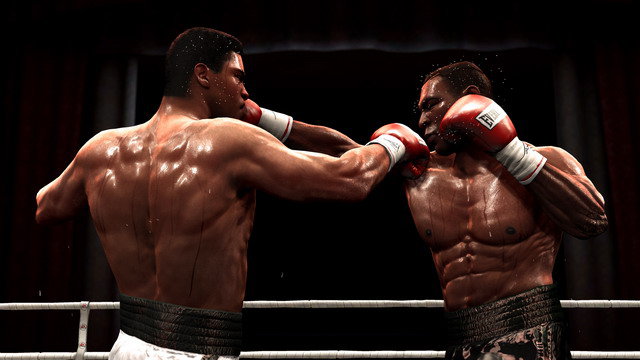
It was my first fight as the great Roberto Duran. A few rounds in, I noticed Duran's white trunks had this odd red pattern on them. After a moment, I realized it wasn't dye in the fabric, but blood. My opponent's blood. Fight Night Champion shows the brutal price boxers pay for stepping into the ring. You can practically see the imprint of the glove on someone's face when you tag them enough. You can tell the severity of a cut – from mere scrapes to deep gashes – on the cheek just by looking. And once the blood starts flowing, you'll know it. It's all over the ring -- and Roberto Duran's trunks.


Fight Night Champion, the fifth entry in the series, does an excellent job of enhancing the experience in the ring. Not only can you see the impact of punches, but some gameplay tweaks give you better control over their delivery.

Gone is the old punching system that required complex analogue stick moves, such as half-circle moves for uppercuts. Now, every punch is thrown by flicking the stick quickly in a specific direction. The altered punching system not only speeds up the flow of a bout, but also puts the emphasis of your fighting skills on your strategy. It's nice to know you are definitely throwing an uppercut rather than hoping you made the right movements with the thumbstick to pull one off. You can still attempt a ridiculous rapid-punch session, but the penalty of exhausting your fighter quickly is severe. No one can really play like a fool and have long-term success with Fight Night.
Fight Night Champion
Other changes include replacing the over-the-top haymaker with a modifier to simply add a little oomph to any punch, simplified blocking, and a new stamina/endurance system that's a touch more sophisticated than before. Streamlining the gameplay makes the technical aspects of a fight easier to grasp, allowing you to focus on more important areas -- like trying to actually box.

And when I say "box," I mean as opposed to brawling. The option to just wail away is still present in Fight Night Champion, but only at the default settings. Even then, the addition of flash knockouts requires even mindless punch jockeys to consider using defense. If you don't move around the ring and protect yourself, you risk more than just abuse. The threat of a one-punch KO is constant. Previous Fight Nights had "flash knockdowns" before, which means getting dropped to the mat suddenly with one hit, but a flash knockout means that you are immediately unconscious with no chance to get up. It's an instant KO.

Fight Night Champion, the fifth entry in the series, does an excellent job of enhancing the experience in the ring. Not only can you see the impact of punches, but some gameplay tweaks give you better control over their delivery.
Fight Night Champion
Gone is the old punching system that required complex analogue stick moves, such as half-circle moves for uppercuts. Now, every punch is thrown by flicking the stick quickly in a specific direction. The altered punching system not only speeds up the flow of a bout, but also puts the emphasis of your fighting skills on your strategy. It's nice to know you are definitely throwing an uppercut rather than hoping you made the right movements with the thumbstick to pull one off. You can still attempt a ridiculous rapid-punch session, but the penalty of exhausting your fighter quickly is severe. No one can really play like a fool and have long-term success with Fight Night.

Other changes include replacing the over-the-top haymaker with a modifier to simply add a little oomph to any punch, simplified blocking, and a new stamina/endurance system that's a touch more sophisticated than before. Streamlining the gameplay makes the technical aspects of a fight easier to grasp, allowing you to focus on more important areas -- like trying to actually box.

And when I say "box," I mean as opposed to brawling. The option to just wail away is still present in Fight Night Champion, but only at the default settings. Even then, the addition of flash knockouts requires even mindless punch jockeys to consider using defense. If you don't move around the ring and protect yourself, you risk more than just abuse. The threat of a one-punch KO is constant. Previous Fight Nights had "flash knockdowns" before, which means getting dropped to the mat suddenly with one hit, but a flash knockout means that you are immediately unconscious with no chance to get up. It's an instant KO.
Fight Night Champion
Champion Mode has you living out the rise, fall and rebirth of fictional boxer Andre Bishop. The five-hour story is a seamless mixture of cutscenes and boxing matches. Just about every boxing movie cliché is thrown in and yet the story is incredibly compelling. Fights suddenly have meaning. Whether it's kicking the ass of a white supremacist in prison, earning a gold medal at the Amateur World Championships, or stepping into the ring for your first professional fight -- the story creates an incredible impact for Fight Night.

This can lead to some interesting gameplay situations. At one point, you bust your hand on someone's head and have to fight like a southpaw the rest of the match. To get the attention of the boxing world, your corner man demands you knock your opponent on his ass. Winning isn't enough. You have to score a knockout. Some of these criteria get a little tedious, but for the most part it makes Champion Mode stand out from the rest of Fight Night. While it serves as a training tool, Champion Mode also adds some emotional weight to a series that has ignored the human drama of boxing for far too long.

If only everything felt as fresh. Much of the rest of Fight Night feels like the same old game with a new coat of paint splashed on. I don't mind the announcing styling of Joe Tessitore and Teddy Atlas -- I've heard them on Fight Night before -- but hearing the same people despite new lines of dialogue just feels stale. There's still no great long term stat-tracking happening. Example: there's a Trophy/Achievement for defeating every boxer in the game, so it must be tracked internally, but it's not shown to players. Why not some way to know which boxers I've beaten and whom I've beaten them with?
Fight Night Champion
The real drag is Legacy Mode. This is the career mode for your own created boxer. It's very much like Fight Night Round 4, but with the addition of an economy. You can pay to train at better facilities and fund your career with the sponsorships you earn. Otherwise, this feels like it did before -- a slow, plodding, uninspired drag. I can't say strongly enough how much I dislike Legacy Mode. It's off the mark in almost every way. The training modes are too hard and become tedious. And why do boxers start off fighting so pathetically? No stamina, no power. The matches are slow and boring. I want to be a rising star. Legacy Mode acts like Mike Tyson's first professional fight had him swinging like a kid on the playground.

Legacy Mode is made all the worse by contrast to the genius of the Champion Mode storyline. Frankly, Champion Mode should be the career. All that's needed is to allow users to customize how Andre Bishop's stats improve and then to let them continue the career after the story concludes.

The only way to enjoy a career in Fight Night is online. Though you still start off way too underpowered, the online setup is clever and well worth EA investing more in for the future. Players can create their own gyms, which others can join. It's basically a boxing clan. There are tournaments as well as regular online bouts. It's a great idea, and if taking on real people and not the AI is your thing, the online mode will definitely do the trick. Also On: PS3

Closing Comments

Fight Night Champion gets the boxing right and adds a flawed but enjoyable story mode. I've always put a lot of stock in career modes, but Legacy mode here is just downright bad. The mini-games are too tough and get boring fast. The entire concept just seems off. What should greatly extend Fight Night Champion's playtime, made me like the game a lot less. Avoid the career mode, enjoy the story mode, and spend a few hours creating some dream boxing matches. That will make any boxing fan happy.

by: Hilary Goldstein

Tiger Woods PGA Tour 12: The Masters

Tiger Woods PGA Tour 12: The Masters Last year Tiger Woods PGA Tour 11 used the Ryder Cup, an international tournament as its selling point, which was kind of underwhelming. This year EA Sports took another tournament to use as a focal point for Tiger Woods PGA Tour 12, and it's a hell of a lot cooler than the Ryder Cup. It's time for fake golfers to finally get to play in The Masters.
Everything in Tiger Woods PGA Tour 12 is themed around The Masters, and the prestigious tournament is included in all three versions of the game. The Xbox 360, PS3, and Wii versions all have different control schemes and game modes, but the big things are the same across all three versions.


The entire career mode has been built around working your way up to competing in The Masters. Your character has to progress through amateur leagues, and pass the Q school, a tournament series that golfers have to complete to become pros. After that your golfer competes in a variety of professional tournaments until he or she is invited to The Masters. The new structure is a significant improvement to the career mode. The constant goal of going to The Masters is a nice change of pace from the general tournament structure and all the other major tournaments are in here as well.

Outside of the career mode are even more Masters themed elements. You can recreate nine different "Masters Moments" based on iconic shots from previous tournaments. There's also a mode where you play as Tiger Woods through his four Masters Tournament wins, having to match or beat his scores for each round. As a simulation these extra modes are good additions, though because they all take place on Augusta National, the one golf course that the Masters is played on, they can get tedious if you want to play all of them.
Tiger Woods PGA Tour 12: The Masters
Included with the Masters packaging comes a new commentator, Jim Nantz. It's great to have Nantz in the game, because his voice is iconic to the sport of golf. There's a ton of commentary both from Nantz as well as his co-commentator David Feherty. It does get repetitive, especially when you're putting, but it's very well done. However, I wish they had put in something more exciting when you win The Masters. There should be something to indicate what a momentous occasion it is, instead of just commenting casually about my Par on the 18th.

The actual mechanics of the game haven't been changed much since last year, but there is a noticeable gameplay addition: an in-game caddie. Before nearly every shot, your personal caddie will recommend a couple options. If selected, the game automatically chooses your club, adjusts your angle, and aims, but it's just up to you to take the shot at the power he suggested. For the most part the caddie works great. He's not designed to be perfect, so sometimes his shots aren't the absolute best shot you can take, but if you follow his advice you will golf a good game. Plus he's fully voice-acted and though he gets repetitive, he's well done. Ultimately though, he's a glorified help system, albeit a really well done one. It would have been nice if the caddie explained everything he did to alter the shot so that newer players could learn about the game mechanics, and graduate from having to use him. It's a great new feature though that really opens the game up and makes it more accessible for new and old players alike. There are still plenty of things you have to do yourself, like putting spin on the balls, and power shots, so it's not like the game is playing itself. And you can always choose to turn the caddie off entirely.
Tiger Woods PGA Tour 12: The Masters
The previous improvements to the game have been kept for PGA Tour 12. Features like the use of focus to increase aim, and the experience system will be familiar to those that played the game last year. That said, annoying things like the need to grind your created character for hours if you want to have any hope of competing in an online tournament are also still here. The Wii version has a more limited online mode, without GamerNet, but the bonus features like disc golf and mini-golf are in here still too. I actually prefer disc golf to real golf half the time, but unfortunately you can't play it on the Augusta National, which is a missed opportunity.

On Xbox 360 and PS3 Tiger Woods PGA Tour 12 features 16 courses on the disc, and 20 available as DLC. The game finally incorporates DLC courses into the career mode, though in an awkward way. As you play the career, you'll try to enter a tournament attached to a DLC course. The game will stop you and inform you to go purchase the course from the store, or skip the event. Having a good chunk of my career mode blocked off sucks, and comes off as crass. By comparison, the Wii version of the game, which features no DLC, comes with 25 courses. If course amount is a deciding factor in your purchase, the cheaper Wii version has nine more courses than its HD counterparts.

MOTION CONTROLS
There are now two versions of Tiger Woods PGA Tour 12 that feature motion control. Using the PlayStation Move or Wii Motion Plus you can swing your remote as if it were a real club.

Both versions have TrueAim, the first-person golfing mode that has you look down at the ball as you swing, and keeps the camera in first person so you watch your shot sail off into the distance. The controls for both versions are nearly identical, and they both work very well.

The Wii version includes a couple of new additions, most notably Balance Board support to measure your feet placement. It also has the extra motion-control modes like disc golf, mini-golf, and party games.

The PS3 version is in HD and has a more robust online mode with GamerNet, the persistent online challenge mode.

Closing Comments
Tiger Woods PGA Tour 12 doesn't play much different than last year's game, but the additions of a more fleshed out career mode focused around the long-awaited Masters Tournament and a caddie system that welcomes new players round out the game more. All three versions are great, so you can't go wrong with whichever you choose. I prefer the PS3 version because of it's balance between the motion controls online play. If it featured disc golf like the Wii version it'd be the premiere version of the game.

by: Jack DeVries

Major League Baseball 2K11

Major League Baseball 2K11

It feels like the MLB 2K series is taking the baby steps approach. After the poor showing over the last couple of years, 2K Sports has worked on improving the game incrementally. MLB 2K10 was playable, but definitely didn't compare to its rival, MLB: The Show. Non PS3 owners don't have much of a choice when it comes to baseball games, so it's nice to see Major League Baseball 2K11 making improvements. But know that these are still small steps. You've got a good baseball game here, but it's not a homerun. Compared to its predecessor, there aren't many new things in MLB 2K11. The developer chose instead to improve and build on the modes already in the previous installment. My Player, a mode I enjoyed from last year, has been noticeably improved. You step into the role of one


member of a team, playing only that character as he bats and fields. The ways your character can earn stat points has been increased, making it easier to build up your player over the course of a few seasons. It still has that problem of being a limited game mode, as you only get to play defense when it's a play that is hit to you. But honestly, if I had to stand in right field doing nothing for most of the game I would want to kill myself.

The Franchise mode has some added features, like allowing you to manage your minor league divisions, and making the injuries and trades more detailed. But ultimately the mode feels somewhat lackluster. It feels like playing in a vacuum a lot of the time. When I'm in a tight three team race for the NL West title, I'd like the game to recognize it.

During the games, there's a noticeable improvement in the character animations for pitchers and hitters. Players throw, swing, and approach the batter's box less like robots, and more like the players you know and love. The fielding animations look better too, but still don't string together very well. The game as a whole has a lot of aliasing issues, and the textures need a lot of work for many of the stadiums. It wouldn't be very noticeable were it not for all the close-ups, freeze frames, and slow motion replays the game has.
Major League Baseball 2K11
MLB 2K11 uses the same stick controls for pitching and hitting as last year. Rotating the right stick performs the various pitches, from simple up down flicks, to more complicated rotation moves. The pitching works well, and I really like the controls and timing, but it can get hard as hell. The AI batters seem to read the pitches better than actual baseball players do. The Umpire got a lot smarter this time around, so my cheating strategy of barely touching the strike zone is no longer a viable option. I had to learn how to actually pitch.

Hitting is still very difficult, but that's baseball. The sense of accomplishment when I smack a ball up the alley or manage to steal a base is something many other sports games don't manage to capture. 2K's automatic use of batter's eye to predict the pitch is more preferable to me than The Show's guessing the pitch mechanic, and it can make all the difference when you're down in the count.

There are a large variety of options to alter the difficulty in the game, and nearly all aspects of it can be changed, allowing you to fine tune your baseball experience. Thankfully most the Achievements are no longer locked to Pro mode, so you can still increase your gamer score even if you're not good enough for the big leagues.
Major League Baseball 2K11
Thankfully, MLB 2K11 has fixed a number of bugs and glitches from the last iteration, though a few new ones have managed to sneak in. The always annoying (and by this point expected) AI problems are still in the game to a degree. AI players will occasionally miss plays that shouldn't be too difficult. The problems weren't abundant, and I didn't experience the level of play altering bugs that 2K10 had, with one notable exception. There's a glitch where if a player jumps over a wall to rob a home run, the game will count it as both an out, and a home run. It happened multiple times, making me think I had gone crazy and that the MLB changed the rules of baseball.

The three man commentator team of Steve Phillips, Gary Thorne, and John Kruk is some of the best sports games have to offer. However, a lot of the dialogue is recycled from last year, and it doesn't take very long before it gets repetitive.

There's a noticeable improvement in the lag and glitch issues that plagued the online mode last year. There are still some slowdown moments, but overall the few games I played online worked pretty well. Keep in mind I didn't have time to play an online franchise, but intend to fully test that and write a follow-up that will also include fully testing 2K's dynamic player rating system that will adjust player levels during the actual baseball season.

Closing Comments
If you don't own a PS3, then MLB 2K11 is your only choice in baseball video games. It's not a bad baseball game, and has certainly made some improvements. Pitching and hitting are both fun, and the My Player mode has been expanded on to make it more accessible and engrossing. The glitches are fewer, but still noticeable, and the game does make some graphical improvements, though the game engine is looking tired. As cliché and tired as it sounds, I look forward to seeing what 2K sports brings next year.

by: Jack DeVries

Selasa, 19 Juli 2011

Pro Evolution Soccer 2011 3D: PS3

Pro Evolution Soccer 2011 3DFIFA might be grabbing all the headlines, but let's not forget that Konami's game never got any less beautiful as it slipped into the shade. A new piece of host hardware serves as a reminder of that, and while EA has moved the goalposts with its precision play and pursuit of authenticity, PES still has the power to enchant. The new hardware helps, for sure, but underneath that dazzle there's a football game that harks back to PES's glory days. That's probably down to the fact that Pro Evolution Soccer 2011 3D leans so heavily on them – this game has its foundations firmly in the PlayStation 2 era, thanks no doubt to the fact that it's seemingly a port of the more recent PSP efforts.


This means that some of the more recent additions in the series' mainstream – total control, for instance – have been lost, but it still plays an extremely refined game of football. Goals, when they come, are well worth celebrating, and they're often at the end of the kind of fluid passing that the game's robust ball physics enable.

While Nintendo's hardware does a good job of bringing some visual flair, it struggles a little in delivering the intricacy of control that its bigger brothers can. The analogue nub does a fine job, but the loss of a pair of shoulder buttons is felt and it's a shame that some of the control innovations of the Wii's PES games didn't find their way on to the touch screen.
Pro Evolution Soccer 2011 3D
Instead, the touch screen is dedicated to doling out snap tactics and housing the radar, and it's here that an unexpected fault of Nintendo's new hardware comes to light. The thick column of plastic that separates the two screens makes it hard to dart a glance from one to the other, a real problem when the reduced real estate of the 3DS's screen necessitates a certain amount of reliance on the radar.

Thankfully it's a problem that soon gets lost in the rhythm of the game, and after having to endure Konami's more recent efforts on Nintendo's handhelds, it's a delight to play something that's so faithful to the source – and the end-to-end, flair-led football it deals in is perhaps as good as it's ever been.

THE 3D EFFECT
The 3D helps that impression, certainly, as does the fact that Pro Evolution Soccer 2011 3D goes further than most of its fellow launch titles in showing not only what Nintendo's handheld is capable of but also what it can bring to existing genres.

It does so aggressively at first, the default camera being a dynamic one that swoops across the pitch. As a technical showcase it's supreme, though as a means of keeping atop of a game it's next to useless. It's efficient enough in keeping the ball in view, as well as the player in control, but setting up shots or picking out teammates to pass to is a much tougher exercise.

You can't fault Konami's enthusiasm, but it's still a game that's best played in the traditional, side-on view. The 3D effect might be less pronounced, but it's still useful – the added depth and sense of perception unsurprisingly help in a sport where precision placement is king.

Pro Evolution Soccer 2011 3D is as fully featured as you could hope for a handheld game, for the solo player at least. The licenses it has are made to do some heavy lifting, with a full Champion's League mode coming complete with all the pomp and ceremony of the real thing, although, sadly, the Copa Santander Libertadores hasn't made the cut. Master League is back and is as horrendously moreish as ever, and even in its understandably watered-down state it's enough to turn one quick game into an entire night spent chasing the signature of that one player you're convinced can turn your fortunes.

Indeed, it only really falls short in its multiplayer offerings, with local play and a cute if uninvolving StreetPass feature not enough to compensate for the lack of online play. It's a missed trick that's perhaps indicative of the game's rush to accompany the launch of the 3DS rather than any oversight at Konami, but it still leaves a hole in the heart of an otherwise commendable outing for the series.

Closing Comments
Pro Evolution Soccer 2011 3D makes a strong debut on the 3DS, and of all the launch titles available it puts forward one of the strongest arguments for Nintendo’s brave new vision of the future. It’s a couple of features short of being a classic, but its compelling game of football has found a comfortable home on the handheld. It suggests that greater things are to come from this relationship, but there’s enough here to keep players going until then.

THE 3D EFFECT

The 3D helps that impression, certainly, as does the fact that Pro Evolution Soccer 2011 3D goes further than most of its fellow launch titles in showing not only what Nintendo's handheld is capable of but also what it can bring to existing genres.

It does so aggressively at first, the default camera being a dynamic one that swoops across the pitch. As a technical showcase it's supreme, though as a means of keeping atop of a game it's next to useless. It's efficient enough in keeping the ball in view, as well as the player in control, but setting up shots or picking out teammates to pass to is a much tougher exercise.

You can't fault Konami's enthusiasm, but it's still a game that's best played in the traditional, side-on view. The 3D effect might be less pronounced, but it's still useful – the added depth and sense of perception unsurprisingly help in a sport where precision placement is king.

Pro Evolution Soccer 2011 3D is as fully featured as you could hope for a handheld game, for the solo player at least. The licenses it has are made to do some heavy lifting, with a full Champion's League mode coming complete with all the pomp and ceremony of the real thing, although, sadly, the Copa Santander Libertadores hasn't made the cut. Master League is back and is as horrendously moreish as ever, and even in its understandably watered-down state it's enough to turn one quick game into an entire night spent chasing the signature of that one player you're convinced can turn your fortunes.

Indeed, it only really falls short in its multiplayer offerings, with local play and a cute if uninvolving StreetPass feature not enough to compensate for the lack of online play. It's a missed trick that's perhaps indicative of the game's rush to accompany the launch of the 3DS rather than any oversight at Konami, but it still leaves a hole in the heart of an otherwise commendable outing for the series.

Closing Comments
Pro Evolution Soccer 2011 3D makes a strong debut on the 3DS, and of all the launch titles available it puts forward one of the strongest arguments for Nintendo’s brave new vision of the future. It’s a couple of features short of being a classic, but its compelling game of football has found a comfortable home on the handheld. It suggests that greater things are to come from this relationship, but there’s enough here to keep players going until then.

by: Martin Robinson

MLB 11: The Show: PS3

MLB 11: The Show

There was a time when I was a baseball fanatic. I've had season tickets to both the Padres and the A's. But over the past few years, my interest in baseball has almost completely died out. To Sony San Diego's credit, MLB 11: The Show has recaptured the magic of America's favorite pastime for me. What's got me geeked? Fielding, believe it or not. For the first time ever, the fielding ratings of each player matters. In the past, speed, arm strength, and accuracy all factored into your success, but reaction time was equal for all. And there was no momentum to a player, so taking a wrong step to the left on a ball trailing right had little impact. All of that's changed.


When a ball's hit to the outfield, there's a delay on a fielder's reaction based on their ratings. Almost instantly, Ichiro goes back on a ball. Nick Swisher, on the other hand, needs a second to figure out where the ball is headed. You literally can't control a poorer defender like Swish for a second -- there's a forced delay to simulate his lesser ability at judging the ball off the bat. You want to load up your team with big fly hitters? Go for it. But if they're all terrible fielders, you'll have to score a ton of runs to compensate.

Analog throws areanother new wrinkle to fielding. The longer you hold the right thumbstick in the direction of the base, the harder the throw and the greater the chance you'll throw it offline. Again, ratings play a huge role here. You can overthrow with someone like Vlad Guerrero and not see disaster -- they may just throw it off the bag a bit. Do so with someone with hammer hands like Luis Castillo and, well, chances are good that ball is going into the stands.
MLB 11: The Show
MLB 11 on the whole places an emphasis on analog control, not just fielding. There's analog hitting too -- pull back as the pitcher releases to start your timing, push forward to put the good part of the wood on the ball as it crosses the plate. Simple in theory, but getting the timing down while trying to identify the type of pitch and if it's out of the strike zone is not so easy. I found myself starting to take more pitches than I ever have before. And with the new "contact" option (sacrifice power just to get a piece of the ball), I'm able to foul off pitches until I see one to my liking. It feels like a real batter/pitcher duel. Tough, but hitting isn't supposed to be easy.

Pitching is even trickier to master. Pull back on the analog stick to start your windup and when the ball icon is about to hit the line on the pitching meter, push up. As you push up, you can nudge left or right, which represents where you aim towards home plate. It's fun, but often too challenging. The worse the pitcher, the harder to target pitches and the greater the cost when you fail.

Once you up the difficulty from the Veteran default level, forget about using anyone who isn't friggin' awesome on the mound. Analog pitching is a good idea, but it needs refinement to lower some of the frustration.
MLB 11: The Show
These big gameplay improvements are accompanied by visual enhancements. You know, C.C. Sabathia is a big man. In MLB 11: The Show, CC's girth is on full display. He must have just come from the Hometown Buffet. But he looks like CC on the mound and that's what matters. The signature players look, act, and play like their counterparts. With a sweet set of new infield and outfield animations, baseball heroes and goats are on full display this season in the field. There are marvelous turns of double plays and cringe-worthy throws that make it into the crowds.

At times, MLB 11 looks a lot like the real thing, but it sacrifices some stadium details -- especially the backdrops -- and more dramatic shadows to maintain performance. It's certainly more important for a baseball game to run smoothly, but the awe of some of baseball's magnificent theaters is lost.

At least some of that can be replaced with the sounds of the game. Get the sound right, and you can still feel like you're there. The crowds certainly get into it -- booing regularly and cheering at the proper moments. Sometimes, when it's quiet, you can hear a single heckler from behind home plate try to rattle a batter. The stadium ambience is solid. The broadcast crew, not so much.
MLB 11: The Show
Matt Vasgersian and Dave Campbell are back, but the hyperbolic Rex Hudler has been replaced by the somber Eric Karros. This is an example of three separate audio tracks poorly cut together. Not only do these guys just not mesh, the audio mix is also poor, with inconsistent sound levels for Dave Campbell in particular. A new cast is sorely needed -- preferably three people with some chemistry.

There's a lot more to a baseball video game than the play on the field or some easily mutable announcers. The two main modes, Road to the Show and Franchise are both back and both have seen minor improvements from last season.

Road to the Show is where you create a Double-A ballplayer, level him up by earning experience from good play in the field, and eventually make your way to the Big Leagues. This year's version starts you off with a set of sliders when you first begin your career that help determine what type of player you'll become. Want a speedster who makes great contact? You can make it so.

While this slightly skews your starting stats, you'll still be stuck with a ballplayer who begins with average speed and only Double-A quality at-bats. I get that Road to the Show is about building up your player, but fast is fast. You don't start like a turtle and learn to be a hare. You're either fast or you're not. It's a bit of a disconnect between what makes sense for baseball and how much "game" Sony San Diego wants to wrap around things.
MLB 11: The Show
Player progression in Road to the Show is better this time around, with more sensible awards for your performance. The quality of an at-bat matters almost as much as getting a hit. Battle a pitcher for a dozen pitches, then fly out and you get a reward; after all, you took a serious chunk of your opponent's stamina away in a single at-bat. But all that said, this is still the same ol' mode as the past few years. To call it stale would be an insult to week-old bread. Time to reboot this thing already.

Franchise Mode also needs a refresh, though it's still a worthwhile offering. The one major improvement is to trade AI. This is now one of the best trade AI's in sports games. You want Derek Jeter? It's going to cost you prospects. Just like in real baseball, few trades happen without one team having to offer up some top Minor League talent. The only sticking point? No three-team trades.

There are a few other cool bonuses to MLB 11 that don't need much detailing. Online co-op is a fun distraction, but more a novelty than anything else. Same with the addition of Home Run Derby using PlayStation Move. And online leagues? It's hard to say how well these will function, since they need a few weeks in action to really evaluate. It's a nice option if online matters greatly to you.

Closing Comments
MLB 11: The Show takes some big strides to improve the gameplay and largely succeeds. Fielding matters now and the new analog controls for pitching and hitting are fun. The lack of major improvements to Franchise and Road to the Show are disappointing, but The Show remains the best baseball game in town. If you've been waiting for someone to take you out to the ballgame, wait no longer. MLB 11: The Show is here.

by: Hilary Goldstein

Wipeout In the Zone: X 360

Wipeout In the Zone If you've been longing for a more grownup version of Double Dare, ABC has a television show called Wipeout that's probably up your alley. Contestants run through an obstacle course full of physical challenges, but the obstacles usually fight back and hit the contestants in the nether regions before throwing them into a pool of mud or water. That's exactly what Wipeout In the Zone does with Kinect, and it's actually a lot of fun to play. I'm not in shape and the idea of jumping up and down in my living room does not appeal to me, but Wipeout In the Zone struck a chord and delivered a multiplayer experience that got me sweating and smiling.


Just like the game show, Wipeout In the Zone is broken into episodes that pack three rounds of challenges. The video game is hosted by the same snarky men and sexy sideline reporter, but this time they've been Xboxed (they're avatars). You play as your avatar or one of the ones you've unlocked through the game. Wipeout In the Zone sticks with this bright, cartoony style, and it works. None of the challenges are visually stunning, but they look good.

Still, this is a Kinect game, so who cares about the visuals? The big thing you probably want to know is how it controls. The game is played from a third-person perspective, so as you run in place or jump in your living room, the onscreen character follows suit. This is key to running down the ramps and leaping over leg sweepers. You have to crouch, dive and more if you want to have the best time when the course is said and done.
Wipeout In the Zone
I dug all that. The controls definitely aren't as responsive as some might be looking for -- I had to jump earlier than I was expecting in order to launch myself over gaps and stopping on a dime is all but impossible -- but that didn't matter in terms of the whole package. My matches in Wipeout In the Zone weren't about winning, they were about beating the course of spinning red padding and laughing at my fails. The game uses the same replay system as the show, so watching my friend get clobbered with a big foam bat over and over again from different angles was fun.

There are issues with Wipeout In the Zone. The host dialogue repeats early on, I had no idea how to dive to home plate in Brusieball as there are no real tutorials, and the game can get wonky with the attack windows for obstacles as well as the gravitational pull of the Big Balls.

Closing Comments
Wipeout In the Zone is far from perfect, but it's fun. When I was laughing at my replays or mocking a friend's fail, the little stuff didn't matter. If you have a Kinect and are looking for a game that's offering good times, look no further but don't expect an instant classic. This is a simple game you can just jump into and have a laugh -- in between deep, wheezing breaths.

by: Greg Miller

NCAA Football 12: PS3

NCAA Football 12College is many things to many people, but my four years at Mizzou were defined by football. Faurot Field, the colors black and gold, and waking up at 5 a.m. to be at the tailgate spot long before kickoff are the memories that define my college experience. If you're an NCAA football fan, chances are you have some kind of memory similar to this -- college is all about tradition, and that's what NCAA Football 12 brings to the forefront this year alongside a bunch of other bells and whistles. NCAA Football 12 is EA Sports and developer Tiburon's latest stab at boiling down one of America's most revered pastimes to something you can play in your living room. Luckily for players, NCAA Football 12 is great at this. It takes all the teams, stadiums, fight songs as well as pomp and circumstance we'd expect and shoves it on a disc for you to enjoy.


It starts with the way the game is presented. The ESPN integration is back from last year, and it's more interwoven than ever before. The games kickoff with an introduction pulled from Saturday's cable line-up, the commentary is energetic and interesting, and camera angles make it feel like you're watching the real thing. Tiburon put in a bunch of tunnel entrances and touch traditions to make your school feel like your school. The Wake Forest Deacon riding in on a motorcycle, slapping the NIU Husky statue, the LSU Tiger roaring in its cage -- it's all there, and this attention to detail makes the games feel more like the real thing than any NCAA game I've played before.

Of course, then there are the little things that pulled me out of the experience and reminded me I was playing a game. A shadow would freak out on the ground, a cameraman would be cut in half by the field goal net, and so on. Anyone who has played NCAA Football in the past few years is used to these little moments. Seasoned players are also going to be used to the gameplay in general.
NCAA Football 12
Yes, NCAA Football 12 packs a new collision system that makes tackling more lifelike and the 3D grass makes for some breathtaking replays, but the nuts and bolts of gameplay feels largely the same. That's fine, as it's as awesome as ever to read blocks and break a big run or pick off a cocky QB, but it does keep NCAA Football 12 from feeling like it made any massive leaps forward. Last year's game was great and this year's game adds a bunch of flair, but the additions are all about presentation and leave the meat of the game feeling familiar.

Dynasty was great last year with its ability to run an online league with friends from a computer, call recruits, and create your own stories. All of that is back, but Dynasty in NCAA Football 12 is about customizing the experience. When I started my dynasty, I was able to create conferences, tweak bowl game settings, and rename divisions. When I had it just right, I created a coach and took the hard road -- choosing the new option to start as an offensive or defensive coordinator. This restricted me to only playing one side of the ball, but it made the rise of my coach -- Fran Mirabella III -- more realistic. I signed a two-year contract and got to watch my job security rise and fall based on whether I was hitting my contract's objectives.
NCAA Football 12
In the past, I've always watched my record and the school's prestige, but the coaching contracts put a new twist on that. Even when Fran's offense was rocking, we'd lose games thanks to the defense falling apart when I was off the field. In the grand scheme, though, it didn't matter as my contract was judging me for yards gained and records broken -- not the number of wins we were pulling in. That's a worry for a head coach.

When my contract was up, I got to get hands-on with the new Coaching Carousel. Here, teams fire, rehire and sign on new coaches. I chose to investigate my options rather than immediately re-sign, and that let me field offers from teams looking for a new direction. This is where you'll make your moves, and it was a bit nerve-wracking for me to pass on my current school's final offer in hopes of getting something better down the road.

The Coaching Carousel is a welcome addition to the NCAA Football franchise -- even though I'd like to see some tweaks. No matter where you start (coordinator or head coach), you're in charge of recruiting for the entire team. That's a bit unreal and should be another honor saved for landing the top slot on a program. I want to be locked out of options until I have the big job so the move feels like a big deal.

The part of NCAA Football 12 getting the biggest overhaul (thankfully) is Road to Glory. Last year's mode was pretty much a rehash, but this year's takes the idea of playing as just one player from high school through college to a different place. Now, it's like a role-playing game. You earn and lose experience points as you practice and play, and this leads to you leveling up in your role on the team. You can go all the way from third string to a campus god, and it unlocks various options along the way.
NCAA Football 12
I chose to be a quarterback, and when I first started, my options were severely limited. The coach gave a play, I executed it. However, as I leveled, I began to take more control. I could flip the play. I could call hot routes at home. I could get additional plays to choose from a certain number of times. It's a really fun mechanic. After years of playing football games, it's interesting to have the choices I've taken for granted stripped away and be left to re-earn them. It makes Road to Glory feel like something other than just another football mode.

Boosters are a part of that, too, but they also tend to break the experience. You can spend the experience points you're earning on career and one-game stat boosts. I could improve my throwing accuracy and power for a game or make my agility better for my entire career. Again, this is a cool idea I dug, but there's a flaw -- it's too easy. By the middle of my freshman year, I was already a 99 overall thanks to boosters. I still struggled in games and didn't have an amazing record, but it was silly to be done with this new option less than a fourth into my career. I hope Tiburon balances it for next year's installment, as it has a ton of promise.

Outside of all that, though, you're getting the NCAA video game you probably already know and love. Passing feels tight, running's fun, loading still takes too long, and online action has the tendency to be a split second off. Little additions such as Road to Glory's online leaderboards and the ability to create your very own playbooks are cool, but the majority of the experience is what you'd expect. Also On: X 360

Closing Comments
NCAA Football 12 is great. I love the coaching changes in Dynasty, Road to Glory isn't perfect but has good ideas, and the new presentation tweaks really make the games feel special. The gameplay is the sweetness fans expect, but it's largely unchanged. That's not a knock -- you don't need to reinvent the wheel every year -- but it does keep NCAA Football 12 from feeling like a groundbreaking experience. Instead, it's more like a special edition of NCAA Football 11, which I'm more than happy to play for hours and hours.

by: Greg Miller

Virtua Tennis 4

Virtua Tennis 4It's probably a good thing that tennis video games aren't an annual endeavor. Don't get me wrong, I love me some Top Spin and Virtua Tennis, but looking at SEGA's Virtua Tennis 4 – and how little has changed in the tennis world in the last four years – I'm more than fine with not reviewing one of these games every year.


Between the two major tennis games, Virtua Tennis was always the more arcade style game, while Top Spin was a more traditional tennis sim. Virtua Tennis 4 stays true to its roots. It's got a wacky, over-the-top feel, and there is more of a focus on exciting tennis action and less on stats and attributes.

Virtua Tennis 4 plays really well. The controls are tight, the animations are good, and the game has a great difficulty progression. The opponents feel unique and require different strategies to defeat. It's satisfying to hit a smash and watch the other guy dive for it. Not gonna lie, I yelled obscenities both in anger and joy during the final, most difficult tournament, and that's how a high energy, emotional game like tennis should feel.
Virtua Tennis 4
The biggest problem with Virtua Tennis 4 is that it feels like I've played all this before. The meat of the game doesn't feel different than Virtua Tennis 3. It's nearly all the same players, and the mechanics are identical. Not that there's a lot that can be improved in a tennis game (it's essentially a glorified Pong), but it's hard to get excited for a game I've played already.

Virtua Tennis 4 isn't all a rehash, but the new features don't add a lot to the experience. The World Tour is now a bizarre board game, adding a level of randomness to the career. While it certainly keeps things interesting, it does little more than add a sense of frustration whenever I couldn't play a tournament or mini-game when I wanted to because the game forced me to move in random intervals on the game board.

Virtua Tennis 4
Likewise the mini-games are back, with the same zaniness like gathering chicks, and playing hot potato with a time bomb, but these are momentary distractions. I commend SEGA for making my training sessions in career mode more interesting than just practicing a backhand, but the games aren't fun enough to play on their own (which is what the game's Party mode is all about).

Thankfully Virtua Tennis 4 features an Arcade mode, a more streamlined four-match tournament that gives you a decent challenge without all the fluff. And there is an online mode, though I wish it was more robust. I can play matches against people, and there's a ranking system that keeps track of my wins, but it'd be nice to set up an online career or tournament structure. That isn't too much to ask.

Motion Controls

All three versions of Virtua Tennis 4 offer motion control. Despite the differences in Kinect, PlayStation
Move, and Wii Motion Plus, they all play about the same. You swing the Wii Remote/Move Wand/Your Arm to swing the tennis racquet on screen. Motion control is not playable in any of the
game's main modes, but rather through a special Exhibition mode. Virtua Tennis 4 has an interesting
first-person mode during these portions. It's limited because you lose the ability to control your player's
movement, but the swinging mechanics are well done and the perspective is interesting.

Still, the lack of implementation for this into any of the game's really modes makes motion support feel
tacked on. All the games advertise their support on the packages, so it's surprising, and disappointing to
see barely used.

Closing Comments
Virtua Tennis 4 is a fun tennis game, after you dig through all the fluff: Mini-games and a needlessly complex career mode. If you already got your fill of Virtua Tennis 3 then there isn't a lot of new stuff in here, which is a shame, but it's still a very solid arcade tennis title. At least PS3 owners now get online play (in theory!), and Trophies this time around.