Replace these every slider sentences with your featured post descriptions.Go to Blogger edit html and find these sentences.Now replace these with your own descriptions.This theme is Bloggerized by Lasantha - Premiumbloggertemplates.com.
This is featured post 2 title
Replace these every slider sentences with your featured post descriptions.Go to Blogger edit html and find these sentences.Now replace these with your own descriptions.This theme is Bloggerized by Lasantha - Premiumbloggertemplates.com.
This is featured post 3 title
Replace these every slider sentences with your featured post descriptions.Go to Blogger edit html and find these sentences.Now replace these with your own descriptions.This theme is Bloggerized by Lasantha - Premiumbloggertemplates.com.
This is featured post 4 title
Replace these every slider sentences with your featured post descriptions.Go to Blogger edit html and find these sentences.Now replace these with your own descriptions.This theme is Bloggerized by Lasantha - Premiumbloggertemplates.com.
This is featured post 5 title
Replace these every slider sentences with your featured post descriptions.Go to Blogger edit html and find these sentences.Now replace these with your own descriptions.This theme is Bloggerized by Lasantha - Premiumbloggertemplates.com.
The game does fail to teach the player some important mechanics, though, resulting in slight exasperation when you don't realize a solution is even possible. The wizards platforms, for instance, can be stuck to swinging spiked maces, resulting in a pendulum conveyance. That's really cool, but it would have been nice to get a heads-up before I found myself stuck at the bottom of an ice slope for a little too long.
When playing by yourself you switch between the three heroes at will. In a matter of moments you might slash through some goblins as the knight, switch to the thief to grapple to a high platform, then switch to the wizard to move a heavy block in front of a flame thrower. Trine 2 is also very friendly about multiplayer gaming, allowing up to three players to join the adventure either locally or online. I find the game becomes easier this way because you've got more than just one brain working on problems and you can multitask, but it's still satisfying.
The few boss fights prove slightly disappointing. While visually impressive, they don't require the same thought as the rest of Trine 2. Merely crossing a chasm can be a real conundrum, but felling a giant beast is as simple as giving it a few whacks to its weak spots. I do love the way the bosses are foreshadowed early on in levels, though.
Closing Comments
Trine 2 throws players into a dazzling fantasy world and gives them three fun tools with which to save it. It's delightfully open-ended, from how you solve problems to whether or not you go it alone. Fans of puzzle games will not be disappointed.
While on vacation in Romania, Josh and his wife, Kate are on a train with several other tourists. During the train ride, Kate is about to tell Josh something when she discovers he was hiding a bottle of alcohol, hinting at a drinking problem. Angry, she walks out and heads to the dining car. Josh comes across a Romanian man who tells him that his wife left a letter for him, and then Josh reads it. Feeling guilty, Josh heads to the dining car to apologize. On his way, he encounters many travellers, such as a student,two ballerinas called Sacha and Tasha, four teenagers Monica, Max, Aaron and Katja, are going to a rave, an English pysciatrist called Jane, two Romanian generals, a Romanian ticket collector, a German businessman and Yeli, a fortune-teller who gives Josh a grim prediction. He then proceeds further only to find the car covered in blood. Bursting into the car, he find his wife being carried out by a large man with an odd-looking mechanism on his face. One of the generals tries to stop the man, but is ripped in half. Josh and Yeli follow and catches a glimpse of a strange man who is laughing manically. Suddenly, the train derails. Josh awakens to find the train in a river, and tries to save the ticket collector, and fails. The general calls him to shore, and Josh runs to a cave with other survivors in it.
The businessman walks away from the cave into the forest and is killed by something off screen. Panicking, the survivors run deeper in the cave until they fall out the other side into a swamp. While making their way out the other general is pulled under and killed, causing the survivors to panic. After escaping the swamp and walking through the forest, they come upon a cemetery where they meet up with another group of survivors. The student wanders into a cellar and is heard screaming. Josh runs to help and finds her panicking, saying she saw a corpse move. Josh investigates and the corpse, along with several others reanimate and attack. The girl runs away and Josh fends them off before pursuing her. Josh exits the cellar and finds that all the survivors have run off due to the zombies. As Josh makes his way through the cemetery, he hears a scream and watches as Monica is decapitated and then thrown at a wall, the attacker being Ernst, his wife's kidnapper. Ernst then subdues Josh, who loses consciousness.
Josh awakens to find that he has been tied to a chair by Viktor, the mad scientist responsible for the zombie infestation. Max is tied up as well, but is soon killed by Viktor. He is about to kill Josh when he gets a phone call and exits urgently, leaving a zombie nurse to finish the job. Fortunately, Josh is rescued and freed by the Romanian who told you of Kate's letter, and they attempt to find their way out. The two make their way though a hall when the survivor inspects a fresh bloodstain, only to end up bisected by a trap. Josh fights his way through a horde of zombies and encounters Jane, but she is kidnapped by Ernst. He later comes across a ringing phone. Josh answers and hears Kate begging him to help, followed by a woman's voice telling him that he will never find her,and a projector shows footage of a webcam with a mysterious woman next to Kate, who is captive in a torture chair. He continues to find strange bedrooms, of which is a crib and a doll making sounds of crying. He then finds a sewing room, filled with dresses and mannequins one of which strangely looks like a zombie, casting a bit of paranoia to the scene. He advances to a cave to find the two Russian ballerinas now zombies. The strange woman from before traps him in with the zombie twins. After he defeats them, he wanders outside to a courtyard.
In the courtyard, he hears someone asking him to help him out of the shed. The man (Fido) is suspiciously calm and claims to have been Viktor's employee once, also claiming to know how to release Kate. He has Josh search for the key and when freed, Josh is surprised to find that his head has been sewn to the body of a small lapdog. Fido tells Josh that he will only help him if Josh helps return him to his human state. After being restored, he gives Josh the key to the tall tower and tells him there's a surprise at the top. Josh then wanders to the top of the tower to find the raver couple, now resembling marionettes. He kills them, and then is transported to a cave, where he picks up a mystical weapon, Azoth, that attaches to his left hand.
Josh eventually finds Kate, but she is strapped to a table with Viktor and Ernst next to her. Viktor tells Ernst to kill Josh, but Josh defeats him. Near death, Ernst becomes more human, and lets Josh and Kate escape. In a fit of rage, Viktor brutally murders Ernst. Josh and Kate run into a forest, but Kate is entranced by a sudden music that starts playing, and she wanders into a sacrificial site. Viktor is there, but in the body of a woman. He opens up a portal, but Josh destroys the towers that created it, and Viktor is burned to death. However, before he can reach Kate, Marchosias, or Fido in his human form, knocks Josh unconscious.
Josh wakes up to find that he is strapped to a vertical table, with the bodies of Viktor and Ernst present too. Marchosias reveals that he was fascinated by Viktor, and will use Josh in order to reincarnate him. Out of Viktor's corpse he pulls out an eel- like creature, and inserts it into Josh's mouth, making Viktor take the body of Josh.
Josh then reawakens to find himself in a prison cell, in the body of Ernst. He sees Kate walking along with Viktor, who is now in the body of Josh. Kate now believes that Viktor is Josh, and that Josh is Ernst. The two leave Josh/Ernst in his cell. Soon, Josh hears Aaron and Katja, who have escaped from their cell, an event that happens at the start of the game. They open all the cell doors, and Josh tries to follow them, but they scream and run away because they think that he is Ernst. Aaron and Katja run into a trap, and are crushed by two walls. Josh escapes, and also has the advantage of Ernst's two chain hands that can kill an enemy from a distance.
Josh runs after Kate, and sees her walking off with Viktor in Josh's body. He follows, and meets Marchosias. He then reveals an altered Jane, and tells her to kill Josh. Josh overpowers her, and she goes into a mental breakdown. As she starts to burn up, she jumps onto Marchosias, and they both burn together. Josh staggers out into the forest, and collapses.
He wakes up to see Yeli dancing in front of him, saying that before Josh can kill Viktor and claim back his body, he must enter the dream realm to learn why everything happened, then she stabs him with a dagger that sends him back to the train, but in his imagination. Josh can also hear what the other passengers were thinking at the time, before all of them turn into a blood- like gas.
He encounters the man who told him of his wife's letter, and he thinks briefly about how he hates travelling through the cursed forest. Josh then sees the student, who is thinking about how her parents will hate her once they find out that she dropped out of school. When Josh sees the two ballerinas, they both are thinking that without the other, they could be stars. Then he sees the four going to the rave. Aaron first thinks about how he doesn't like 'love and peace', Monica is thinking about how she loves Europe and how lovely Max is, Max is thinking about how to use Monica to smuggle drugs into America, and Katja is lamenting about how Monica is being used as Max's puppet. Josh then meets Jane, who is thinking about her next project, and how half- dead people can be used. She then snaps out of her dream, thinking that she might need counselling. Next, Josh sees the two Romanian generals. One is thinking about how he lost his friends in war because his gun jammed, the other is thinking about marrying the woman he loves and setting up his own business. The next man he sees is the ticket collector, who is strangely thinking about the train derailing. Unable to see Yeli, Josh then sees the German businessman, who wants to embezzle his company's funds. Lastly, he sees Kate. She is thinking about the fact that she is pregnant, a fact Josh didn't know. Viktor then appears by her side, saying that she is the same as his wife Mary. Kate then turns into gas, Viktor sees Josh, and he runs away.
Next, Josh is led to Viktor's memories with Mary. At first, Mary and Viktor were happy because they could have a baby, which was actually Josh's. Then, Josh learns that Viktor tried to make the baby perfect but accidentally killed it, and Mary shouted at him. He strangled Mary to death mindlessly, and then he vowed to learn how to resurrect the dead to bring Mary back. He then sees Viktor dressed in Mary's clothes, and then Josh goes into Viktor's dream world to defeat him. Viktor scolds Josh, saying that his baby is gone, before Viktor suddenly turns into a complete robotic being. Josh finds Yeli's dagger, and stabs Viktor in the heart.
Josh wakes up to see that in real life, he has stabbed Yeli. Not only that, but he is in his own body, and not Ernst's. Josh coughs up Viktor's eel, and it dies. Yeli then tells Josh that Kate is at the ritual site, and she charges his Azoth. She then dies next to the body of Ernst. Josh proceeds to find Kate, and he is teleported to a staircase where he can hear Viktor and Mary. They are arguing, with Mary saying that Viktor killed their baby. Josh then arrives in Mary's dream world, a mystical land of floating islands. Josh finds Mary tending to his unborn baby, and she battles him. She is actually a massive demon that flies, with another head in her heart-like body. Josh eventually kills her with the Azoth, and she perishes. Josh then takes back his baby, and the dream stops.
In a post- credits scene, Josh and a pregnant Kate are leaving Romania on a train. As Josh leaves, he bumps into a man, his face and body badly burned and bandaged. The man sits down near Kate, and opens his suitcase to reveal three small phials with the parasites in them. The man then laughs, and the game ends.
Review
A good survival horror game can suck you in, maybe more than many horror films. You sit in the dark, tension rising as you peek slowly around every corner, wondering what new terror awaits. You desperately hope there's ammo in the next room, and not the corpse of your wife. And then you pretend you're swimming and take a step back because the camera can't sense you. Wait, what? Oh no, that's this stupid horror game, Rise of Nightmares, that does that last part.
Rise of Nightmares puts you in the shoes of Josh, as he tries to save his wife Kate from the clutches of a painfully generic mad scientist. You take control of Josh in a first-person survival horror beat down. It's a first for Kinect, both in terms of its super violent M rating, and a game where players have full range of motion.
The motion controls serve as Rise of Nightmare's greatest strength, and ultimate weakness. At times they work very well, better than most other Kinect games. Hacking the limbs off zombies, kicking open doors, and sidestepping attacks feels natural, and, admittedly, a little satisfying. But then I tried to walk in a straight line and discovered that Josh is either drunk the entire game (a possibility because he does have a drinking problem), or he's even clumsier than the hordes of the undead he fights. Trying to maneuver the endless hallways of the creepy castle you're trapped in involves pivoting your shoulders and taking one step back or forward. And as fun as it is to pretend to be a backup dancer in a Fat Joe video, it's certainly not scary. The option of an auto walk feature, while nice, is basically a neon sign on screen at all times that says "Our game doesn't work!"
Even the best part of the game, killing the crap out of every zombie you see, gets old after a couple hours. Rise of Nightmares attempts to spice up the game with new types of zombies, but it's too little too late, and by Act 4 (of 10) I was just plain tired. The boss battles are the most disappointing part because they're just normal enemies that have a couple attacks you need to dodge with a quick time event like ducking or sidestepping. It's too simple to be challenging or interesting. Repetitive games are bad enough, but when you're using your entire body to play you physically feel the strain of doing the same stuff over and over and over.
Everything about the motion controls serve to make Rise of Nightmares as unfrightening as possible. The game forces you to literally step back from the experience, and as such you can never fully immerse yourself in the story, an essential component of any good survival horror game.
And what a story it is! See, even if you take away the motion controls, Rise of Nightmares is still a ridiculous, laughably bad horror game. It's Bad Writing 101. Every character is one dimensional (bickering main couple, asshole business man, raver youth, ballerinas), and every line is something along the lines of "Aaah zombies! This is f---ing scary!" The story starts off like some House of the Dead meets Hostel thing, but goes completely off the rails towards the end. It takes itself so seriously that the few moments of comedy clash and weaken the plot. Oh, and try not to laugh when the super sexy gypsy says her tearful goodbye to her lover-turned-monster before she stabs him in the balls.
Outside of murdering the mad scientist's army of servants (Seriously, how many identical French maids did you employ, dude?), Rise of Nightmares mostly consists of walking to a door, discovering it's locked, and pulling a switch located 3-6 feet away. That's it. That's the game.
Closing Comments
I’ll hand it to SEGA: Rise of Nightmares is an ambitious title, and it’s even functional for the most part (aside from the most basic of actions, walking). But ambition and basic functionality alone don’t make a game good. The ironic thing about Rise of Nightmares is that the control scheme is so basic it comes off feeling like a game for kids, when it tries so damn hard not to be. Even if you like the novelty of chopping off undead heads longer than I did, a bad horror game is a bad horror game. And Rise of Nightmares is a monster.
Assassin's Creed Revelations marks the end of two eras as it explores the final adventures of Ezio Auditore and Altair Ibn-La'Ahad. Ubisoft's ambitious conclusion to a four game narrative manages to be the best chapter in the Assassin's Creed franchise despite suffering from some familiar problems. Witnessing Ezio and Altair come to grips with the lives they've lived is a remarkable sight, easily worth one more trip to a world we've experienced for several years.
ftUbiso's ambitious undertaking with Revelations, which spanned a half dozen studios across the globe, follows no less than three lead characters, which would be downright catastrophic in the hands of lesser developers. The game's story not only involves Ezio's quest to uncover the secrets of his order, but his budding romance and entanglement in a complex political situation as well. Add in flashbacks to key moments in Altair's life and brief, optional excursions to Desmond's mind in the Animus and this plot is packed to the limit.
Somehow it all works. The most compelling material by far involves Ezio, as his storyline is the most complicated. His quest to discover more information about Altair ties itself to the political and social turmoil in Constantinople. That in turn makes its way to Sophia, who quickly becomes a romantic interest despite the fact that Ezio pardons himself every five seconds to stab someone in the chest. The sequences between Sophia and Ezio flourish emotionally despite their brevity. You believe these two characters are slowly falling in love despite the chaos around them. It's impressive how convincing these moments can be.
Ubisoft's overall storytelling has reached new heights. Previous games seemed to get some cinematic sequences exactly right while others completely missed the mark. Those awkward, jolting moments are completely gone, replaced instead by very real, fully developed characters in strongly-scripted scenes. That leap alone helps elevate Revelations above some of its predecessors. The game's visuals have likewise taken a step up, with characters and their expressions looking better than ever. Voice acting is fantastic and the soundtrack is incredibly solid. All of these improvements, combined with a franchise-best city design, add to the larger narrative experience of the game.
On a basic level, Revelations functions much like the Assassin's Creed games that came before. You're still accepting various missions that task you with chasing, stalking, meeting or killing certain targets. The curse of the franchise has always been that it seems to fill your time with missions that are completely irrelevant to the larger story. Ubisoft more or less avoids that trap this time, mostly because its plot has so many layers. Still, expect a handful of quests that feel a bit too superfluous or are poorly constructed. The game's introduction suffers particularly from some very awkward parameters, setting an odd tone for its opening hours.
The most thrilling moments of the game come when Ezio discovers clues about the keys to Altair's library. It's here where the series' infamous "dungeon" sequences come into play. Much like the Lairs of Romulus or Assassin's Tombs, these epic excavations take you on wild rides that would feel perfectly at home in Uncharted. At times a journey through damp caves and at other times epic chases alongside rivers, each of these segments are simply fantastic, and are the highlights of the entire game.
Almost equal to finding Altair's keys are the chapters that feature Altair himself. Each major portion of the game includes a segment with Ubisoft's original assassin, and players will relive specific moments throughout his life, ranging from a very young age to much older. Some of these missions feel very similar to Ezio's, while others are decidedly different. The variety helps keep things fresh, as does the fact that they're very story-driven and help bring a certain amount of meaning and weight to what Ezio is doing. By the end of the game, you'll see similarities between the two men - as well as differences - which help form one of the key emotional cores of the entire experience.
Ubisoft made a number of additions to Revelations in terms of control, weaponry and gameplay. The most critical alteration is simply a button layout change. Players will now directly access a secondary weapon (throwing knives, a concealed gun, bombs) in addition to a primary one (hidden blade, sword, axe). This helps give players more options, allowing for quick reactions for stealth missions as well as challenging combat scenarios. This alteration affects combat mechanics the most because it changes how you're able to operate within hostile situations.
Bombs serve as an extension of your more flexible combat options. Throughout Ezio's time in Constantinople, he'll acquire a wide range of ingredients that can be assembled into three different categories of bombs. The functionality proves diverse as you'll make everything from a standard smoke bomb to something that shoots out coins to lure dozens of peasants. Whether you distract your opponents or outright kill them, the choice is yours. Generally I didn't find bombs to drastically change my approach to a situation. Countering and chaining kills, combined with summoning my brotherhood for remote attacks, is still by far the most effective way to dispatch foes. Revelations suffers for that inability to break away from its own mold, and as a result, this game continues to feel very similar to its predecessors.
Though missions and core combat mechanics remain very familiar, Ubisoft did add a new dynamic to the territorial control element of Revelations. In previous games, Ezio would not only buy shops around a city, he'd take control of enemy camps by assassinating their leaders. Now the enemies will attempt to take these headquarters back through somewhat-optional Den Defense segments, which are basically a fancy version of a typical Tower Defense game.
Den Defense adds little to Revelations. In fact, it actually detracts from the experience. As Ezio stands on the rooftops near his headquarters, enemy troops march down a street to damage the building enough to take it over. Players must install, through a menu and cursor system, various types of assassins along the rooftops to fend off that attack. Controlling the deployment is rather clunky, as is the way the mode meshes with the overall direction of the game. Assassin's Creed focuses on direct combat, not real-time strategy. Straying too far from that feels like a distraction, a nuisance that undoes your progress just for the sake of doing so. Frequently the game throws overwhelming odds against you, making the entire affair an irritating, extraneous mess. Even more irritating - if you lose, you can immediately climb a wall and assassinate the enemy leader again, rendering your previous 10-minute chore almost pointless. I'd rather see Den Defense completely disappear, but if returns, it needs drastic revision.
The other major addition to Revelations deals with Desmond. Ubisoft chose to make the modern day assassin's sequences completely optional this time, almost anticipating a sharply divided reception to the bold departure in game design. Desmond, who is comatose and attempting to reclaim his mind within primitive Animus architecture, must navigate Tron-like worlds in first person perspective. He maneuvers through these abstract oddities by using two shapes of blocks that he can create and place in the world. The shocking concept is immediately jarring, yet somehow it works, largely because its puzzle-like nature actually plays well and ties to the overall story. Unlike Den Defense, which feels more like an awkward and deliberate attempt to harass you, these Desmond moments are a curious respite from Ezio and Altair's more intense, combat-driven missions. It seems obvious that not everyone will love this concept, but despite their simplicity, the sequences are well done and thought-provoking.
Multiplayer is augmented again this time around, with various new modes, a wealth of customization options, a better interface and even a story mode that will allow players to learn more about the modern day Templars as they progress (or "train") in the Abstergo facility. Ubisoft is creating a fine counterpart to what is typically considered a very single-player centric series. The decision to weave more of the franchise's lore into these modes was simply genius. Most remarkable is the mode's ability to create a variety of unique gameplay experiences through different match types. Wanted and Deathmatch recreate the more calm and collected idea of stalking prey while something like Artifact Assault is far more breakneck and frantic. The fact that all of this experience builds towards an ultimate goal will certainly reward those accustomed to focusing on the core storyline.
Closing Comments
Despite adding a number of features, Assassin's Creed Revelations is very similar to its predecessors, and that's both its biggest strength and weakness. There's nothing wrong with Assassin's Creed. It's a great franchise with unique, compelling and well-designed gameplay. The catch is that we've effectively been doing similar things for the last several years now. Incremental upgrades are more than welcome, but at some point players need a new experience.
That said, Revelations serves its lead characters well and is a very effective bookend. The improvements in graphics and storytelling, combined with already-great voice acting and music, help make this a memorable finale for some of the most interesting video game characters we've seen in this generation. Not even the weak new Den Defense mechanic or Desmond’s insane side mission system can change that fact. And multiplayer will certainly reward those looking for a break from first-person shooting. The gameplay there continues to improve on an already-addicting formula, and learning more about the Templars proves rather fascinating.
This is the best Assassin's Creed yet, even if that victory is claimed by an inch and not a mile. If you've been following the lives of Altair and Ezio this long, you owe it to yourself to see their last adventure.
Dragon Nest is the latest in a string of Action-MMORPGs to migrate from South Korea. While the developer, in this case Eyedentity Games, is usually responsible for the awesomeness in any given title, Dragon Nest owes a great deal to its localization team in North America for some of its more joyous aspects.
That's not to say that Eyedentity Games didn't do a great job, though -- because they did. Dragon Nest is a solid action game; the controls are tight, combat makes a lot of sense, and group interaction during the fifteen-minute (or so) dungeons, like rushing in to juggle an enemy after an ally has knocked them up, is intuitive while remaining interesting.
They've also done a lot with very little in terms of visuals. While nothing in Dragon Nest seems to extend beyond PS2-era visuals, a cohesive, vaguely children's-bookish art style combined with smooth animations and lots of effects has stopped me from completely disregarding the simple looks. Dragon Nest isn't a graphical powerhouse (and given its intention of being playable on as many systems as possible, it was probably never intended to be), but presents itself with enough confidence and occasional pizzazz that its simple appearance never became an issue. That said, it's weird -- and kind of off-putting -- seeing some of the women with their boobs half hanging out in a game that, from a glance, looks so family-friendly.
But that's kind of Dragon Nest's MO. It looks simple on the surface, but there's a lot more depth (and fun) than initially meets the eye. Fighting isn't just a simple case of mashing the mouse buttons (although that's certainly part of it); dodging when you need to, turning your dodge into a counter attack, and knowing when and how to cancel an enemy's attacks are all very important. Self-preservation is key to the later, tougher fights, because even the Priest class (which I primarily played) heals only very rarely, and for quite small amounts. Instead, the "healer" relies more on disabling enemies and positioning them cleverly for allies to pour on the damage. It's a system I enjoyed immensely, though at times felt a little less rewarding than I would have liked.
Rewarding players is something that Dragon Nest definitely needs to work on. Sure, quests have rewards, but I found myself getting rewards that I typically had no need for, like Topaz Fragments (which I have yet to find a that requires them), or pieces of gear I couldn't use yet, like a level 20 necklace when I was still level 17. Finding gear that was too high-level for me was a consistent issue with Dragon Nest. There seems to only be gear made for specific level ranges, so during gap levels I found myself accumulating gear I couldn't equip. That's a problem, given how little inventory space you have by default. More can be bought permanently from the NX shop, but if you plan on playing for free, be prepared to go all Sophie's Choice on those new boots and that new pair of pants you found. More frequent usable upgrades would help alleviate this, because I would be less inclined to keep gear if I knew more was always coming.
Luckily, the quests themselves are entertaining, even with temporarily-unusable rewards. Whenever you pick up or turn in a quest, you are met with some genuinely clever, often witty dialogue with the NPC. Each NPC is completely fleshed out, and they make tongue-in-cheek jokes about the similarities they may have to other NPCs in other towns. Reading the dialogue is delightful, and it's entirely thanks to the North American localization team at Nexon.
Although the quests always send you to a dungeon, the dungeons have enough engaging encounters and difficulty levels that they tend to at least keep me interested throughout. The boss fights on the hardest (or "Abyss") difficulty are particularly cool. Sometimes Abyss bosses come with a second, identical boss for you to tackle at the same time. Other times they are just super strong, have way more abilities and double the health. Whatever the case, the boss encounters are always challenging and enjoyable.
Getting a group together to tackle a dungeon on Abyss can be a pain, though, especially if you've got a specific dungeon in mind. The current party system only displays players looking for party members in your local area. Players can display which dungeon and difficulty they're running, but typically don't, and there's no matchmaking. Nexon's other 3D session-based MMO Vindictus has a dungeon-by-dungeon party system which works much better.
If you get tired of running dungeons, challenge maps and a PvP arena also exist to ceaselessly murder in, too. I find the PvP pretty fun, but with more than about 8 players in a map it got too chaotic to really do anything. Instead, if I got singled out, I'd sit and watch my character get juggled for 20 seconds, unable to do anything except die. That's less than an ideal experience, but that's why smaller maps are available, I guess.
Closing Comments
Despite the niggling little issues of matchmaking, gear gaps and the occasionally-chaotic PvP scenario, Dragon Nest has plenty to offer. Its combat is deep and rewarding, and pits you against some truly interesting encounters. The care put into each and every bit of character dialogue is also evident throughout, and adds a great deal to the charm of the world. If you're looking to dip your toes in the free-to-play ocean, Dragon Nest is certainly a good place to do it.
Shadows of the Damned is a strange game. Not just because of its visuals, which are weird, or its story, which is deranged, but because of the way it comes together. Or doesn't. Shadows of the Damned is a game you might play and enjoy, but not necessarily because you'll enjoy playing it. The things it does best - the bizarre visuals, the fantastic soundtrack, the strange narratives and side stories - are largely removed from what you spend your time doing.
The premise to Shadows of the Damned is simple-ish, but again, strange. Garcia Hotspur's crazy (no, really, she's completely out of her mind) girlfriend Paula has killed herself, and the lord of Hell, Fleming, has claimed her as his own. So Garcia's off to the City of the Damned to get her back, with only his Johnson to help him.
Yes, that was a dick joke, and get used to it. Shadows of the Damned leaves no stone unturned in its quest to find (and f**k) every possible opening for a joke about a penis. It's not subtle. It's not even especially clever most of the time. But it tries to compensate by being as unabashed and gigglingly self-aware about it as possible. And it almost pulls it off, unless, of course, you're past laughing at genital humor. If that's the case, you'll want to get off at the next stop. Mechanically speaking, Shadows of the Damned is a collection of strange, arcade shooter conceits stuffed into a game that seems like it's poking around the edges of a modern third person action game. Garcia wields Johnson, his former-demon-turned-swiss-army-knife-of-hell-knowledge-and-pain-dispersal companion, in one of three different weapon forms: a pistol, a shotgun, and a machine-gun. Johnson can also fire out a light-blast that has various effects – it incapacitates weaker enemies, and it can chase away darkness during one of Shadows of the Damned's many dark-light puzzle sequences.
The City of the Damned is frequently home to giant pockets of inky darkness that will slowly tear Garcia apart – it is called Shadows of the Damned, after all – unless, that is, he can figure out a way to chase it away. The particulars become more complicated over the course of Garcia's feel-good trip through the underworld. Early on, a quick light-shot into a mounted (but alive-ish) goat head is enough to clear it up, but later on you'll be shooting multiple balls of blood snaking vein-like off a central hub of darkness spewing demon pubes and… well. You get the idea.
The problem here is that none of this is particularly interesting. Combat feels clunky, which is a combination of issues perceptual and mechanical. The camera is zoomed in much too close to Garcia to have a good view of what's going on when he's aiming, and Garcia is yet another third-person shooter plagued by molasses arms. On normal difficulty, the only danger you'll ever really face are from enemies hitting you from off camera because your field of view is so small. Granted, you're not stuck in place while you're aiming, but otherwise, Shadows of the Damned plays like a game from 2005, not 2011. This carries over into Shadows of the Damned's boss fights, which, for better or worse, play like they were designed a decade ago. I'm cool with the idea of shooting a weak spot. I can accept that Shadows of the Damned is a capital "V" Video Game, and I often enjoyed the subtle (and not) references to what seemed to be Capcom arcade and NES titles from the 80s in particular. But the constant cheap knock-downs and excessively punitive tactics of later bosses take them from fun to tedious in short order, and it doesn't help that they last much, much longer than they should. The only thing more boring than fighting the same enemy for 20 minutes is dying most of the way through said boss and doing it all over again.
And repetition is really Shadows of the Damned's worst enemy. You'll get some weapon upgrades, and the scenery changes, but you're doing the exact same thing over and over again, from the obvious moments (kill wave after wave of enemy until the game decides its time to move on) to the less obvious (many of the darkness puzzles feel identical). Even when Shadows of the Damned introduces new enemies, you'll be managing crowds more or less the same way. Every game is a feedback loop, sure, but Shadows of the Damned feels more like running laps than most. Interaction with everything boils down to shooting it or hitting it, unless, of course, you're jerking it off.
No, really.
But here's the thing. I enjoyed my time with Shadows of the Damned, for the most part. The game part has a few surprises in store, specifically the super-stylized side scrolling sections (to say more would spoil them for you if you haven't seen them yet). The main character bosses, the ones explored in their own twisted storybooks dotted around the City of the Damned, are interesting and usually fun. But more than anything, Shadows of the Damned's style and the clear homage it pays to the exploitation cinema sub-species known best via Tarantino and Rodriguez's Grindhouse is what kept me going. It's full of gorey imagery and graphic nudity, and we're not just talking a little bit of it. Piles of bodies and giant scenes of exposed flesh play major roles in Shadows of the Damned.
But it doesn't stop there. About half of one of Shadows of the Damned's lengthy chapters is an extended tribute to Raimi's Evil Dead and Evil Dead 2. There's a plethora of references in the game to the kinds of movies that I grew up watching or desperate to watch, if only my parents weren't looking. To steal a line from my last preview of Shadows of the Damned, it often felt like executive producer Suda 51 and I were sharing a moment, a convergence of minds based on a shared love for the weird VHS heyday of horror and twisted comedy. And that's something I've never gotten from a video game.
Closing Comments This is the inherent conundrum of Shadows of the Damned. Your own tastes will determine whether it's more or less than the sum of its basically functional but not-especially-interesting parts, and the attitude and style it carries like a chip on its shoulder. As an action game, Shadows of the Damned is a passable exercise in a few interesting ideas often buckling under the weight of controls and level design stuck firmly in the past. But as a weird tour through a Hell we haven't seen before, with a love for subject matter that neatly sidesteps the likes of other Grindhouse-inspired games over the last few years, Shadows of the Damned is an experience that's worth having... for a particular audience.
When developer Telltale Games said it was making Back to the Future: The Game, I didn't know what to think. On the one hand, I was thrilled to see one of my favorite film franchises coming back to video games. On the other hand, how do you make a Back to the Future game that doesn't suck? The answer is apparently clever dialogue and good characters, but that's not to say this title is perfect. Back to the Future: The Game doesn't bomb like the DeLorean brand did, but it's not a runaway success like the hoverboard either.
Told in five episodes that are a sequel to the movie trilogy, Back to the Future: The Game casts players as Marty McFly, Michael J. Fox's character from the films. Doc Brown -- inventor of the time machine -- has gone back to the '30s, been framed for arson, and will die via mob justice. The third-person, point and click campaign is focused on changing his fate, but as we learned in the movies, screwing with the past mucks up the future. The goal is to make sure 1986 is just how Marty left it when Episode 1 -- It's About Time started.
When I first started playing this season, I was in love. Episode 1 starts off with such sincerity. Doc's been gone for months, and Marty's broken up over it. This is a side of the character the movies never went into -- Marty's depression made me love him and feel for him as I traipsed around levels. This is the pinnacle of Back to the Future: The Game.
See, the trouble is, Telltale Games gambles away that connection to the character. Episode 2 continues to be grounded, but Episode 3 turns a corner and then the game goes from being an attempt at a fourth movie to a Saturday morning cartoon show. There are sight gags, a human reprogramming facility, and an end to the season that's completely out of character for Doc and Marty. I don't know if I would've necessarily minded the over the top cartoon stuff if that's all the game was, but I got hooked on Marty and Doc's relationship. That connection is briefly touched on in a moment that had me tear up in the final episode, but then the game gets even goofier. It's not committed one way or the other, and that made me enjoy it less. While the vibe of the story is all over the place, getting through the game and its events are fun. The voice work throughout all five episodes is stellar with Christopher Lloyd back to be Doc, A.J. LoCascio doing the best Michael J. Fox impression I've ever heard, and a cast of new characters that I became enamored with as the episodes went on. These performances and the colorful, cartoon art style setup a world that I could get lost in -- at least until visual issues popped up. Lip syncing was always off, the animations were rigid, and framerate drops were common place. These issues stick out and make the game feel like a less than stellar experience.
I've spent a lot of time waxing on about the story in Back to the Future: The Game, but that's because story is the reason I'd recommend people play them. The gameplay here is traditional adventure stuff. I'd walk around as Marty, talk to citizens, and use items I picked up to solve puzzles. How does a pipe end up with Marty getting booze? How do I record a confession in the '30s? These are the hurdles I had to face in Back to the Future: The Game. Thing is, none of them were that hard. I was able to motor through the episodes only getting hung up once or twice. Even then, I eventually came up with a solution, but if you get really stuck, there's always the game's generous Hint system. If you're looking for a challenging adventure game, this isn't it. Closing Comments I liked Back to the Future: The Game, but I didn't love it and that sucks. The first two episodes had me hooked but the next three lost me as they got more and more crazy. I have no problem with a developer trying new things and taking franchises to new places, but starting off serious and ending goofy left me unimpressed.
Back to the Future: The Game is good and an enjoyable journey, but it's not without issues.
True survival horror games are rare these days. Games like Dead Space and the most recent Resident Evil titles can be scary but tend to be just as focused on action as they are on atmosphere. In Frictional Games' Amnesia: The Dark Descent, you get no gun. When a gruesome shambling creature rounds a corner on wobbly knees and its yawning rictus comes into focus, you can only succumb to its onslaught or flee in terror, hoping
the shadows will provide safe haven. It plays more like a first-person adventure game than anything else, and borrows many of the environmental manipulation mechanics of Frictional's previous Penumbra series. It's a fairly short game, but one that's near impossible to forget.
If you've ever read an H.P. Lovecraft story before you'll find a lot that's familiar here. Much of the horror and structure of the plot is inspired by the 20th century author, as sanity is eroded the closer you draw to the sinister heart of the tale. You play as Daniel, who awakens clueless on the floor of the huge and hauntingly empty Castle Brennenburg. Soon after coming to, you discover a note written by your past self, instructing you to find and kill Alexander, the master of house. Unraveling the history of the place is part of what lures you forward, discovering how exactly you got to this point, what Alexander did to deserve an early death, and who is responsible for the grisly acts committed in the castle's depths.
What follows is a tale told mostly in flashback as you' re beset by ghostly visions and uncover journal entries on dimly lit desks that tell of scientific expeditions that lead to the discovery of ancient terrors. By itself the story is strong enough, and told effectively assuming you take the time to explore and pick up a majority of the notes. Yet what really adds a quality of unsettling authenticity to the tale is the unshakeable feeling of pursuit and inevitability of some kind of horrific climax.
The sensation is created by a combination of implied and observable events. On the soundtrack, scratches, clicking and footsteps from unseen spaces imply an expanse of unknown rippling just beyond the limits of your perception. Visual cues are also crucial to reinforcing the sense of terror, as Daniel's vision is affected by ghastly sights and revelations of gruesome acts to which his previous life was connected. Sanity degrades while in the dark, causing the scene to shift like the webs of light across sands under shallow water as sounds intensify, controls are muddied, and eventually insects crawl across your field of vision. It contributes to an feeling of isolation and helplessness that adds to the sense of terror.
Staying in the light is the preferred course for those who prefer to maintain mental focus. A lantern is always available to light up corridors, provided you've enough fuel to keep it lit. Tinderboxes are also scattered around amidst ancient books and in dusty cabinets and used to spark torches to illuminate passageways and candles within kitchens and torture chambers to make it less psychologically taxing as you explore. You can still see in the darkness if you've run out of both oil and tinderboxes since Daniel's eyes will eventually adjust to the deep-blue murk of darkness, but there's a moment of adjustment, mimicking the dilation of his pupils to altered intensity of light. Sometimes the transition is harmless, but during the momentary blindness that besets Daniel as he stumbles into blackness it's entirely possible a shambling monster could round a corner and slash him down. It's not something that happens often, but the lingering threat is enough to make you tread carefully even if the way forward seems clear. It also sets up a gameplay dynamic between dark and light -- do you stay in the shadows to hide from enemies but risk your sanity, or light up everything you can to keep your wits? Puzzle solving is the heart of the gameplay, and like in Frictional's Penumbra games, manipulation of objects is handled in a way that gives you a greater sense of connection to the character. To open a door, you must click and hold the object with the left mouse button, then draw the mouse back or push it forward depending on which way the door swings. To open a drawer it's the same mechanic, requiring you to pull back on the mouse once the handle is grabbed to open it. Occasionally you'll need to toss items around rooms to break down fragile walls and shatter chains, but for the most part this kind of manipulation is used to keep you more firmly rooted within the game world and add a touch of realism, strengthening the horror aspect. Actually solving the puzzles shouldn't be too difficult for anyone who's played adventure games before. Despite the bizarre and often disturbing states of the sewers, morgues, and downright revolting torture chambers later on, the solutions often require you to collect a few objects and combine and apply them in simple ways. The game makes this easily manageable by confining solutions to set areas, meaning you don't need to worry about backtracking all the way to the start of the game if near the end you worry that a particular puzzle might require an overlooked item. Frictional's done a good job of pacing the game as well, gradually expanding the area and complexity of the puzzles and mixing in jaw-clenching pursuit sequences as you plunge deeper into the mystery. All the while you watch as bare stone walls are overtaken with pulsating masses of organic material and as hints of malevolence are made manifest and stumble after you through the dark and mists, establishing an inescapable mood that sticks with you long after the adventure is complete.
Closing Comments This is one of the scariest games in recent memory. The loading screen recommends you turn the lights off and play with headphones, something I'll strongly echo. Amnesia: The Dark Descent's puzzles aren't especially impressive and the voice acting can range from convincing to goofy, but the atmosphere Frictional has infused into the experience is as powerful as they come. It's a tale of terror that's menacing and disturbing from the very first moments, and only amplifies the further you progress. Any fan of horror, every Lovecraft fan, and any with even a hint of curiosity should give Amnesia a shot. Few games are able to conjure up an atmosphere this genuinely frightening.
Sam the straight-shooting dog and Max the hyperactive bunny have been solving mysteries and fighting crime together as the Freelance Police for quite some time now. Since the anthropomorphic pair has been under Telltale's care, they've been embarking on point-and-click adventures divvied up into episodes. The latest season, The Devil's Playhouse, is a great offering for fans of the franchise and people who love adventure games.
Narrated by a plump man with crazy awesome hair in a setting reminiscent of the Twilight Zone, the season begins with Sam and Max aboard a spaceship shaped like a monkey head. The ship is owned by evil space ape General Skun'ka'pe' (or, as Sam and Max call him, Skunkape) who's focused on collecting the "Toys of Power" to gain control of the world. Y'know, the typical evil space ape motivation. After banishing the General to the Penal Zone (best name for a prison ever), it turns out that the whole scenario was actually a visualization of the future. It appears that the seemingly harmless View-Master toy Max picked up in an alley was actually one of the Toys of Power and touching it sparked his psychic potential and granted him the power of seeing the future. With such awesome functions, it makes sense that Skun'ka'pe isn't the only one searching for the toys. In addition to the ape, a fez-wearing necromancer called Paperwaite seeks them in order to summon the dark God Yog-Saggoth back to this dimension. The yarn unravels from there, including a power-crazed teenage Pharaoh brain, Max's stolen brain and masses of Sam clones (lovingly called "dogglegangers").
All chapters of The Devil's Playhouse are self-contained stories that tell a piece of the overarching saga about the mysterious Devil's Toybox and Toys of Power. Following sci-fi and noir film themes, there's an introduction, climax and conclusion to every game but there's also always some unanswered questions and a twist at the very last moment to lead players into the next episode's storyline. This method of storytelling is well executed and the twists and turns are fun to experience. To keep the game fresh, each episode is structured differently. For example Episode 2: The Tomb of Sammun-Mak requires player to jump around different sections of a movie reel while Episode 4: Alley of the Dolls is more of a linear exploit. The Devil's Playhouse fosters some whimsical personalities, from the protagonists themselves to side characters like Baby Amelia Earhart and Slushie the vampire elf. In typical Sam & Max fashion, there are cultural and videogame references riddled throughout the cleverly written dialogue. Conversation branches can seem long-winded at times, so you might find yourself skipping over the less important interactions. That said, there are some great moments between the Freelance Police, and it's always good fun to watch Grandpa Stinky and Girl Stinky (co-owners of Stinky's Diner) fight with each other.
Though the overall storytelling is solid in episodes 2 through 4, the first and last portions of the season do leave some things to be desired. In typical introductory fashion, the first episode focuses on setting up the story for the rest of the games, which means it's a bit lackluster compared to the meatier middle episodes. The ending also hits a sour note. It seems like everything was going to be neatly wrapped up in the fourth episode, and in my opinion, it really could have ended there. Instead, Telltale grabbed the crazy dial and clicked it up to 20. For obvious spoiler reasons I won't say what happens, but the end, with the exception of one major twist, fell a bit flat for me. The last chapter felt more shoehorned in than a necessary part of the story.
Over the course of the season, Max's psychic powers consist of the ability to transform into different objects, teleportation, and more. The bunny's new abilities are what help make the gameplay interesting throughout the chapters. You very rarely have access to every power, so the challenge is figuring out how to use the powers available to your advantage.
The psychic powers also add an element of light-hearted humor, especially when you get the Mind Reading ability or have Charlie the puppet throw your voice to make other people or inanimate objects talk. Of course, there remain puzzles that aren't tied to Max's psychic abilities, and they range from the practical (like getting Grandpa Stinky to give up his Demon's Broth) to the completely wacky (trying to turn the DeSoto into a giant hot-dog).
Though the Devil's Playhouse is full of puzzles to contemplate, you'll also struggle with the controls. Navigating Sam can get cumbersome, especially because you have no control of the camera so it can be hard to see where you want to go. If you're playing on the PlayStation 3, expect a choppy framerate and wonky controls that make it difficult to explore certain areas. Using the analog sticks to try and click on an object when it's surrounded by a bunch of other selectable things is downright frustrating.
PC users don't have framerate issues, but the only methods of movement for Sam are using WASD or holding down the left mouse button and using it like a joystick, which means it suffers from the same control issues as the PS3. It's a shame, especially considering you should be able to point and click on your destination in a point-and-click adventure title.
If you're struggling to figure out which version you want the only real question you need to ask yourself is, "Do I want Trophies?" and there you go.
Closing Comments If you’re looking for an adventure game that packs a lot of humor, interesting puzzles and psychic powers together in a Twilight-zone/science-fiction skin, you should give Sam & Max: The Devil’s Playhouse a try. Although the beginning and end don’t seem as polished as the middle portions, the season in its entirety tells a fanciful story complete with an awesome cast of characters.
The long-awaited return of Parasite Eve, ambiguously titled 'The 3rd Birthday', is a welcome one. The third title in the series, fans will get the most out of the smaller character cameos and setting details. New players shouldn't fret too much if you haven't played the previous games though; Square Enix provides a lot of optional background to pour over that plug the gaps. More critically though, each game features entirely different gameplay slants - with a dense RPG backbone blended with third-person action in this instalment.
Manhattan just can't catch a break these days. Aya Brea, hero of the original titles and Square Enix cult-favourite from the PSOne era, is back in the Big Apple, which has been torn apart in a terrific CG opening sequence. As the game-proper begins, we discover a year has passed and humanity is in a dire state. Aya, pulled from the rubble and now without memory, is tasked with travelling back in time to prevent the outbreak spreading. The expanded universe of Parasite Eve now incorporates a strange new genetic threat – a gigantic infestation of heinous tentaclular beasts known as The Twisted – and Aya has a new ability at her disposal to stop them in their tracks -- and no, it's not her ability to flash a lot of butt cheek. 'Overdive', triggered by holding down the triangle button at any time, allows Aya to immediately teleport to and inhabit any human being nearby. This is, hands down, the coolest mechanic in The 3rd Birthday. Overdiving creates a lightning-quick pace to the shooting and serious depth to the strategy that most shooters can't touch. It works simply, logically and fairly accurately.
By inhabiting other humans, you immediately gain their health status, weapons and placement in the battlefield. That means you can effectively guide your AI counterparts into different formations on the field, creating crossfire points. It also makes it harder for the enemy to pin you into one place. The Twisted are initially easy to dispatch, but after a couple of chapters, the skies fill with targets spraying toxic clouds, gigantic wriggling behemoths roll towards you from all angles and cover bring a fleeting reprieve. There are dozens of types – and not all are vulnerable to bullets. In fact, without mastering movement and working out individual strategies for each, expect to get punished. It's at this point that mastering Overdive becomes essential.
To balance things, Aya is fairly weak. If you're not fleet-footed and master your dive-rolling and auto-cover abilities, you're smoked. Thankfully, you can choose to 'ascend' back to the secret between-missions facility and tune up before choosing to dive back in time.
It's therefore critical to spend a while tuning up your latent genetic abilities and armament. This is, like both previous entries, a game built on RPG stat-tracking and upgrading – and you can't afford to simply charge into each level expect to live. Weapons are plentiful – and at various points in each stage, there are safe-rooms that allow for saving. The pace and placement is generous, and we're grateful for that.
You really do need to spend your experience points upgrading the potency of your weapons and adding new active and passive abilities to Aya. Weapons tables cover all manner of pistols, revolvers, various sub-automatics and a cool dozen special weapons. Tweaking these is fun; pouring points into upgrading clip size, accuracy and overall damage is completely worthwhile – but arguably holding onto some points is also a good idea. You'll unlock a couple of new weapons at the end of each chapter - and these tend to benefit from decent stat-boost anyway.
If that kind of constant upgrading isn't your bag, you're probably going to come up against a wall. Likewise, Aya's genetic makeup stands in for 'magic' – though you're not actively casting spells. Still, the 9 x 9 grid of stackable 'cells' take a bit of thinking to master. If you're not careful, you can completely waste your new genes – and starting again wipes any you've already applied to the grid. You need to be careful. Of course, you can stumble your way through, since the menus and presentation are fairly clear-cut and, honestly, Square Enix did a great job making a while lot of content as accessible as possible without sacrificing depth. This depth extends to the between-missions briefings, backstory logs, character biographies, a variety of optional achievement-like 'Feats', loads of unlockable costumes and the ability to replay any mission. This is a rich experience for a PSP game.
That said, the PSP is also admittedly an odd choice for a game like this; there's an ambitious shooter buried within The 3rd Birthday that doesn't play as well as it should with a single analogue stick. It's something of a gameplay barrier that even the most talented developers have had trouble overcoming. Square Enix's solution is to fall back on auto-aim and let players toggle between targets. It works—mostly. In simple encounters, where you only have two or three targets in your immediate view, it's hardly an issue. You just aim forward and let the game handle choosing the most appropriate enemy to ventilate. It's only when you start facing off against fast moving opponents (and swarms of airborne ones) mid-way into the game that gameplay cracks start to appear.
For all the dive-rolling and auto-targeting, you can't ever be as quick or accurate as you wish you could be. Using the D-pad to toggle between enemies is a hit-and-miss affair (excuse the pun) and bringing out a weapon like the sniper rifle (or any of the manual-target heavy explosives weapons also highlight how cumbersome the single-stick aiming is. It's just not a consistently smooth experience – but if you can persist, it's a lot of fun too.
The 3rd Birthday also delivers an overall quality of presentation that most games are hard-pressed to match on the platform. It speaks for the kind of investment Square Enix has made in the PSP since its release; so many of the company's titles look marvellous. The game sets the default point of view to a handy over-the-shoulder angle, which also gives the player a great view of the landscape. Square Enix has crafted a gorgeously detailed series of areas, each lavished with the kind of small details PSP games rarely see. The boss battles – set in open fields with plenty of destructible objects and interactivity points, are generally excellent. The engine cranks out a surprising amount of lighting, particle effects and physics too.
The voice acting is a mixed bag – largely due to a translated script that has the emotional depth and impact of a bad daytime soap opera. The dialogue is flimsy and straight-to-the-point, and that's a bit of a sin from a studio that we know is capable of tremendous translation efforts (check out Tactics Ogre on PSP). Fans of TV's 'Supernatural' series will immediately recognize Jensen Ackles' voice work in The 3rd Birthday – and he's probably the highlight. His part doesn't factor in until midway into the game, but his raspy, dulcet tones are well suited.
Closing Comments The 3rd Birthday is great game, no question. It has depth, great production values throughout (despite the disappointing script) and the raw mechanics give PSP gamers a mostly satisfying RPG-shooter despite the system's inherent flaws. As gamers prepare for the NGP and North Americans get a refresher course on Parasite Eve via PlayStation Network, we're hoping The 3rd Birthday is a sign that bigger things are planned for Aya Brea. This series deserves it.
Gamers of all types recognize the name "Lara Croft." You know the drill by now: she explores dangerous ruins, finds treasure, occasionally fights dinosaurs, and does all this with a variety of flattering outfits. Lara Croft has been a video game icon for more than 10 years, and the Tomb Raider series wouldn't be the same without her.
For those of you that missed out on some of the recent Tomb Raider adventures, you're in luck. Tomb Raider Trilogy crams Tomb Raider Legend (PS2), Tomb Raider Anniversary (PS2), and Tomb Raider Underworld (PS3) all onto one Blu-ray disc. It's a convenient way to catch up on Lara Croft's dangerous affairs, especially for people like me who haven't kept up with the series since its first outings on the original PlayStation.
There's not much to find in this collection that you wouldn't find by purchasing the games individually. Both Legend and Anniversary have had minor graphical overhauls, but don't expect to see a wealth of bonus content flood your PS3 the instant you pop in the disc. There are a few developer diaries, some Home rewards, a PlayStation 3 Theme, and Trophy support for all three games. It's not a bad offering, but it felt light. If you'd like to read detailed reviews for each of the games included in the collection, click the images below. Otherwise, read on to find out if this trilogy is worth your money in this day and age.
If you haven't played Legend, Anniversary, or Underworld, this is a pretty good deal -- especially if you enjoy games like Uncharted that combine platforming, puzzle solving and gunplay. That's what you'll be doing in all three games. Lara goes after some sort of treasure, shimmies over lethal spikes, kills a bunch of bad guys, and moves weighted crates. Not a problem for England's finest. Legend is the oldest of the three games and was originally released in 2006. This doesn't seem like too long ago, but the game shows its age. Not only do environments lack the detail I've come to expect, but the character models look poor in comparison to the rest of what you'll see in Tomb Raider Trilogy. Anniversary, a remake of the very first Tomb Raider, is much prettier. Underworld, which continues the intriguing story told in Legend, is the most beautiful of the set and features some impressive animations.
After playing Legend, Anniversary, and Underworld in that order, it amazed me to see how the developers at Crystal Dynamics improved the gameplay with each title. All three abandon the "tank controls" of the past (the original Tomb Raider was famously clunky) and incorporate more organic platforming. Lara can quickly leap from one ledge to another, spin around poles, and flip through the air with grace. These platforming mechanics are functional in Legend, more enjoyable in Anniversary, and downright nifty in Underworld.
Similar improvements can be found in the combat. In general I'm not a tremendous fan of the "lock on and then pull a trigger to fire" gunplay because I like to aim manually and control my shooting. And the combat in Legend is embarrassing. Apparently Lara is one of the worst shots in history because she can't seem to hit anything unless it's close enough to take her gun away. Couple this inaccuracy with the fact that she can't take stick behind cover and you'll find some very awkward action sequences.
This is much better in Anniversary and Underworld. While it's still not as good as manual shooting, both games do a much better job depicting action on the screen and giving players a more rewarding experience. This is noticeable when you see how the developers reworked the adrenaline system. In Anniversary, it enables players to dodge incoming attacks easily and execute one-hit kills. In Underworld, adrenaline can be triggered at your whim and invokes all sorts of Matrix nostalgia that I'm still not sick of.
If you couldn't already tell, Legend is the worst of the three games in the collection. It's the veritable mold on this otherwise solid set. It's old, it's disappointing, and it ruins perfectly good sandwiches. If anything, it only serves to tell us more about Lara. Fortunately, both Anniversary and Underworld are strong enough to carry the weight of the rest of the package. Read more details on how this game was reviewed.
Closing Comments Tomb Raider Trilogy is a handy collection of three recent Tomb Raider games, two of which have been given a graphical boost and take advantage of the PS3's capabilities. Tomb Raider Anniversary and Tomb Raider Underworld are both fun games and combine immensely enjoyable platforming and some neat puzzles with mediocre combat. But Tomb Raider Legend just doesn't hold up. I'd even recommend skipping it, though you do miss out on a few cool scenes if you jump straight into Anniversary.
It's easy to argue that every video game we play, with rare exception, is derivative of a game that came before it. For Finnish developer Housemarque's newest game titled Outland, you could point to any number of titles released in the years before 2011 and say "Outland is like this, that and the other thing." Because it's a 2D platformer, perhaps it's most akin to something like Super Mario Bros.
Then again, its reliance on color polarity may remind gamers of Treasure's famous shoot-em-up Ikaruga. And its emphasis on map exploration, upgrading and some collecting may invoke memories of Super Metroid.
While Outland manages to combine all of those elements very successfully, it's not necessarily like any game you've ever played. Outland isn't only an incredibly fun foray into the ever-expanding potential of downloadable titles on services like Xbox Live. It's also an exceedingly stylish -- and even beautiful -- experience that pushes gamers to their limits in terms of not only difficulty level, but also in one's ability to fully appreciate just how artfully-done the game actually is. There was real thought put into the game's design and it shows at every turn. Outland's story presents a nebulous scenario where two mystical sisters control light and dark forces. Eventually, your character is imbued with the skill to utilize both powers -- represented by the colors red and blue -- which will help you get through various terrains, fight a number of monsters, and even solve puzzles. Indeed, you'll find that your character's ability to swing his sword won't be enough to kill even the most basic of enemies if you're not paying attention to the force color that particular enemy is using.
But don't expect to have all of the power you want right off the bat. You'll begin Outland without many skills at all. Eventually, you'll learn to utilize one force, then the other, and then both at the same time. When combined with other abilities your character will learn -- such as sliding -- you'll find that Outland's various maps will eventually be more accessible to you. In fact, the only real skill you start the game out with other than attacking and running is an old-school Ninja Gaiden-like wall jump that helps you get around.
What all of this means is that Outland is a wide open experience that encourages acquiring new skills and using them to progress through the adventure. Because you can go back through maps you've already completed, you'll find that skills you learn later on can be used in places you've previously visited. When combined with Outland's smooth control scheme and platforming elements, you'll be hard-pressed not to enjoy Housemarque's newest creation.
What's even better about Outland is that there's more to it than just its main quest, which in itself is a fairly meaty adventure. If you want more single-player action, Outland offers up an Arcade Mode that allows gamers to trek through previously-visited locales from the campaign in order to net high scores and fast times that can then be compared via online leaderboards.
Outland also totes online cooperative features. Two gamers can choose to play through the entire campaign together, or work their way through a series of co-op-exclusive challenge rooms that they will occasionally encounter. However, as Outland is somewhat of a cerebral experience, playing it with a friend doesn't really make much sense, and while this feature is totally functional, Outland is far more exciting to play on your own. The co-op challenge rooms are cool, however, and force quite a bit of clever teamwork to get through.
If I do have one major complaint with Outland, it's this: the boss battles are epic and a lot of fun, but there's an inherent problem with them. Because each boss fight is a unique experience, gamers will almost certainly die the first few times they try it while they feel out the situation and figure out exactly what they're supposed to do. This in itself isn't a problem, but what is a problem is the lead-in time in fighting some bosses. For instance, when fighting the spider boss about halfway through the game, you have to fight him preliminarily, then go through a series of corridors, fighting a bunch of lesser enemies, only to get back to the actual boss fight. If you die during that boss fight, you'll have to do the entire thing again. After a while, this can become frustrating.
Yet, in the grand scheme of things, that's only a minor gripe. Outland is a hell of a game, and you should play it posthaste. Out... Also on: PS3
Closing Comments I really like Outland. It’s not only beautiful, but fun. Its appeal is broad, which is great news because Housemarque is one of the great downloadable game developers and everyone should try out their products. And Outland is just such a product. Its impetus on platforming, combat and collecting will intrigue players that like any number of genres, and that’s a good thing, because Outland does just about everything it does exceptionally well.
In 2003 we watched in horrified fascination as the noble Gordon family of Black Mirror castle struggled to hold an ancient evil at bay. Years later, we again saw the primeval scourge work its evil on the Gordons, this time on a new generation. This spring, we once again enter the twilit halls of Black Mirror castle as the Gordon family's last remaining scion fights for his life in a cataclysmic clash between good and evil.
This chapter, Black Mirror III: Final Fear, proves itself to be the best chapter yet, thanks to some cleverly designed point-and-click gameplay and a spell-binding tale of murder, betrayal and possession.
Black Mirror III takes place in the 1990's in the small English village of Willow Creek. Directly following the climactic events of Black Mirror II, young American college student Darren Michaels escapes a dark conspiracy only to find himself accused of arson and murder. Undaunted, and after finding himself unexpectedly connected to Willow Creek's infamous Gordon family, he makes it his business to discover the source of the Gordon family curse. The main thrust of the game is in helping Darren (who's found his true name to be Adrian Gordon) come to grips with his newfound nobility as well as to resist the dark spirit that's invaded his soul. Mordred, an evil Gordon ancestor, has somehow possessed him and the resulting spiritual duality turns the ordinarily normal young man into a modern day Jekyll and Hyde. The strain of Adrian's multiple personality disorder affects him badly; the once handsome college student shambles around haunted and haggard, with deeply hollowed cheeks, popping prescription drugs he hopes will prevent his unpredictably violent fugue states. Unfortunately for him and regardless of the medication, as time goes on the visions grow worse as Mordred threatens to overcome him. To make matters worse, he's forced to endure the bias and hostility of Willow Creek's small-minded inhabitants. Staid and proper on the surface, Willow Creek holds more secrets than a Hollywood plastic surgeon; the pub owner is a drunken, abusive thief, the café owner is cheating on her spouse, the hotel manager is a conniving conman, and the psychologist is a compulsive chain smoker. Even the cops are corrupt and led by a bitter police chief who'd rather be anywhere but Willow Creek. Despite their own shortcomings, these residents are not particularly sympathetic to the young Yankee's plight and none too keen on strangers suspected of murder.
This conflict between the American-college-student-turned-English-Lord and the provincials of Willow Creek makes for a mystery that's fresh but familiar. Skillfully blending past and present, the story's bursting with ghosts, hidden treasures, conspiracies, secret chambers and arcane rituals as you follow the trail that leads to the heart of Black Mirror castle. Difficult situations present themselves along the way, most of which can be solved by good old common sense; occasionally you're asked to solve a traditional puzzle of the combination lock or "Indiana Jones booby-trap" variety and these require a bit more brain power. Some of the latter might prove too challenging for less experienced adventure gamers, but many of them can be skipped so that gamers unable to find the solutions can continue to progress.
In addition to the engaging plotline and interesting puzzle design, the game features a solid script, professional (if occasionally cartoony) voice acting and some beautifully complex environment art. Adrian's a likable young hero with a (slightly overdone) Boston accent. A child of the '90s, he's full of slackerish, Gen-X cynicism and prone to making amusingly sardonic comments about everything he sees. The villagers too can be highly entertaining as they go about their paranoid little lives. And though Adrian never ventures beyond the environs of Willow Creek, we're treated to a considerable range of interesting locations, especially once the mystery surrounding the castle begins to heat up.
Black Mirror III can be a mesmerizing game. A few things however, dilute the fun. While the graphics in general are crisply detailed, the cutscenes are blurrily low-res and the contrast between the two is a jarring distraction. Scrolling through inventory items is a pain thanks to a scroll button that repeatedly vanishes. Finally, the game's ending is extremely anti-climactic. After hours and hours of build up toward what promises to be an explosive conclusion, the whole creepy, convoluted, demon-powered thing just…ends.
Closing Comments Black Mirror III: Final Fear is for the most part, a good adventure game that serves as a fitting end to an absorbing trilogy. It's beautiful, well-written and cleverly-designed and if its only flaws were a flaky scroll button and blurry cutscenes, it would warrant an unmitigated thumbs up. Unfortunately, after working toward a spectacular ending, it disappoints mightily with a resolution that fails to satisfy or even, really, to make sense. Nevertheless, aside from letting us down in the last five minutes, it's a highly entertaining title that's definitely worth taking the time to play.
In Warriors: Legends of Troy, you control a group of legendary heroes that fought in the Trojan War originally described in Homer's epic, The Iliad. Controlling Greek warriors like Achilles and Trojan heroes like Hector, you cut your way through hundreds of poor, under-powered soldiers and -- occasionally -- face off against opposing heroes.
Does this sound like the Dynasty Warriors series to you? It should, because it's from the Tecmo Koei camp, the same folks that develop Dynasty Warriors. But unlike the Dynasty Warriors games, which are developed by Japanese studio Omega Force, Warriors: Legends of Troy is from Koei Canada. And out of the many Warriors games that I've played, it's probably the best. This isn't to say that Legends of Troy is an awesome game, because it's not. But if I have to mow down a bunch of dudes with nothing but the power of the Square button, I'd do it with Legends of Troy.
For those of you familiar with the Trojan War mythology, the story in Legends of Troy will click. Greek armies are invading Troy because of a few nasty romantic mix-ups, but the war drags on for a long time. As in, a decade. You take control of the heroes in this bloody conflict, and that conflict's been divided into several chapters. These chapters alternate perspectives, as you'll be fighting for the Greeks one minute and then the Trojans the next.
After playing so many Dynasty Warriors games, it was refreshing to inhabit a different setting. The story in Legends of Troy is entertaining and has more direction than anything I've seen out of Tecmo Koei's other similar ventures. I was shocked at the pre-level narration, which is written well and accompanied by some beautiful art. Within seconds of starting up Warriors: Legends of Troy, I felt more involved with its world. But this was before the fighting began, and gameplay matters the most.
During battle, you're given different objectives depending on the chapter. Most of these objectives, of course, involve killing hundreds of people. To do this, each hero has a quick attack, a focused attack, and a stun attack, as well as an evasive roll and a shield. If you study the moves list, you'll notice that most combos are pretty easy to execute. Put simply: you press Square until everyone is dead.
At this point, I feared the worst. Would I be mashing one button for hours on end with no sense of purpose? Not quite. As it turns out, Warriors: Legends of Troy has two important features that separate it from many of the Dynasty Warriors games before it. First, you're rewarded for not mashing one button during battle. If you time each individual button press correctly, the corresponding strike is more powerful. Furthermore, every attack builds up a Kleos (money) counter. Executing finishing moves adds bonuses to this counter.
These might seem like trivial systems, but they're tremendously important. In Warriors: Legends of Troy, timing and skill are rewarded and improve your performance, and the Kleos counter gives you a palpable sense of accomplishment as you play. At the main menu, you can spend those Kleos to purchase items that improve your hero's performance. These items take up space on a grid and must be managed like old-school role-playing games (RPG).
Maybe I'm spoiled by RPGs, but I love monitoring my progress. There's something satisfying about seeing your money rise as you stab some nameless soldier through the neck. And then investing that money in items gives me even more of an incentive to keep playing.
These systems alone were enough to entertain me, but there are several other things to enjoy. Your hero can pick up any dropped enemy weapon and throw it, which usually means "instant kill" for any soldier not carrying a shield. This led to maximum guffaws when I tossed a spear across the battlefield and impaled an escaping soldier. I realize this makes me sound crazy, but it's funny because it's not real!
Warriors: Legends of Troy also has a counter attack system so you can land a free hit if you time your block just right. This is an absolute necessity in Legends of Troy's boss fight "duels" which often go down at the end of a level. This is yet another component of battle that requires some skill.
But like its many predecessors, Warriors: Legends of Troy has some serious issues. Although the visuals here are better than past Dynasty Warriors games I've played, the environments don't look as beautiful as they could and character animations are awkward. There are also performance issues when the action gets heavy.
More troubling is the lock-on system, which doesn't use camera orientation but rather your character's direction. For example, if you're running out of the way of danger but you want to lock on to an enemy you're dodging, you can't. You have to turn around first to acquire a lock. When multiple enemies are on the screen, using the right analog stick to adjust your target is unreliable and sometimes doesn't work at all.
There are other minor annoyances, like stage recycling and some hilariously awkward quick-time events. But these don't frustrate me nearly as much as the lock-on camera. also on:X 360
Closing Comments
One of my Warriors: Legends of Troy play sessions involved a comfortable couch and several bottles of beer. For those legally capable of drinking, this seems to be the ideal play environment. Legends of Troy is entertaining, especially for the "hack-n-slash" genre, and has a handful of gameplay mechanics that reward skill and persistence.
There are issues here that prevent Legends of Troy from being a good game, like a clunky lock-on system and frequent slow down. But with a few friends and the right attitude, Warriors: Legends of Troy can be fun. Ryan Clements


 05.40
05.40
 style
style


 Posted in: Adventure
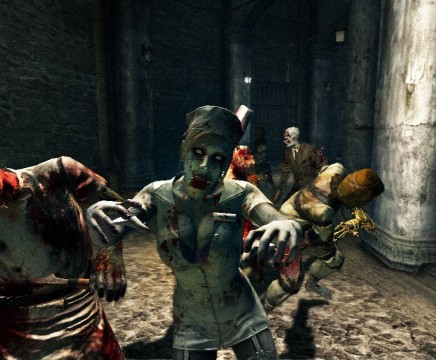




 Shadows of the Damned is a strange game. Not just because of its visuals, which are weird, or its story, which is deranged, but because of the way it comes together. Or doesn't. Shadows of the Damned is a game you might play and enjoy, but not necessarily because you'll enjoy playing it. The things it does best - the bizarre visuals, the fantastic soundtrack, the strange narratives and side stories - are largely removed from what you spend your time doing.


 When developer Telltale Games said it was making Back to the Future: The Game, I didn't know what to think. On the one hand, I was thrilled to see one of my favorite film franchises coming back to video games. On the other hand, how do you make a Back to the Future game that doesn't suck? The answer is apparently clever dialogue and good characters, but that's not to say this title is perfect. Back to the Future: The Game doesn't bomb like the DeLorean brand did, but it's not a runaway success like the hoverboard either.

 True survival horror games are rare these days. Games like Dead Space and the most recent Resident Evil titles can be scary but tend to be just as focused on action as they are on atmosphere. In Frictional Games' Amnesia: The Dark Descent, you get no gun. When a gruesome shambling creature rounds a corner on wobbly knees and its yawning rictus comes into focus, you can only succumb to its onslaught or flee in terror, hoping


 Sam the straight-shooting dog and Max the hyperactive bunny have been solving mysteries and fighting crime together as the Freelance Police for quite some time now. Since the anthropomorphic pair has been under Telltale's care, they've been embarking on point-and-click adventures divvied up into episodes. The latest season, The Devil's Playhouse, is a great offering for fans of the franchise and people who love adventure games.


 The long-awaited return of Parasite Eve, ambiguously titled 'The 3rd Birthday', is a welcome one. The third title in the series, fans will get the most out of the smaller character cameos and setting details. New players shouldn't fret too much if you haven't played the previous games though; Square Enix provides a lot of optional background to pour over that plug the gaps. More critically though, each game features entirely different gameplay slants - with a dense RPG backbone blended with third-person action in this instalment.


 Gamers of all types recognize the name "Lara Croft." You know the drill by now: she explores dangerous ruins, finds treasure, occasionally fights dinosaurs, and does all this with a variety of flattering outfits. Lara Croft has been a video game icon for more than 10 years, and the Tomb Raider series wouldn't be the same without her.


 It's easy to argue that every video game we play, with rare exception, is derivative of a game that came before it. For Finnish developer Housemarque's newest game titled Outland, you could point to any number of titles released in the years before 2011 and say "Outland is like this, that and the other thing." Because it's a 2D platformer, perhaps it's most akin to something like Super Mario Bros.

 In 2003 we watched in horrified fascination as the noble Gordon family of Black Mirror castle struggled to hold an ancient evil at bay. Years later, we again saw the primeval scourge work its evil on the Gordons, this time on a new generation. This spring, we once again enter the twilit halls of Black Mirror castle as the Gordon family's last remaining scion fights for his life in a cataclysmic clash between good and evil.


 In Warriors: Legends of Troy, you control a group of legendary heroes that fought in the Trojan War originally described in Homer's epic, The Iliad. Controlling Greek warriors like Achilles and Trojan heroes like Hector, you cut your way through hundreds of poor, under-powered soldiers and -- occasionally -- face off against opposing heroes.


